
Is It Too Late to Become a Wedding Photographer at 40? Your Guide to a Creative Second Act
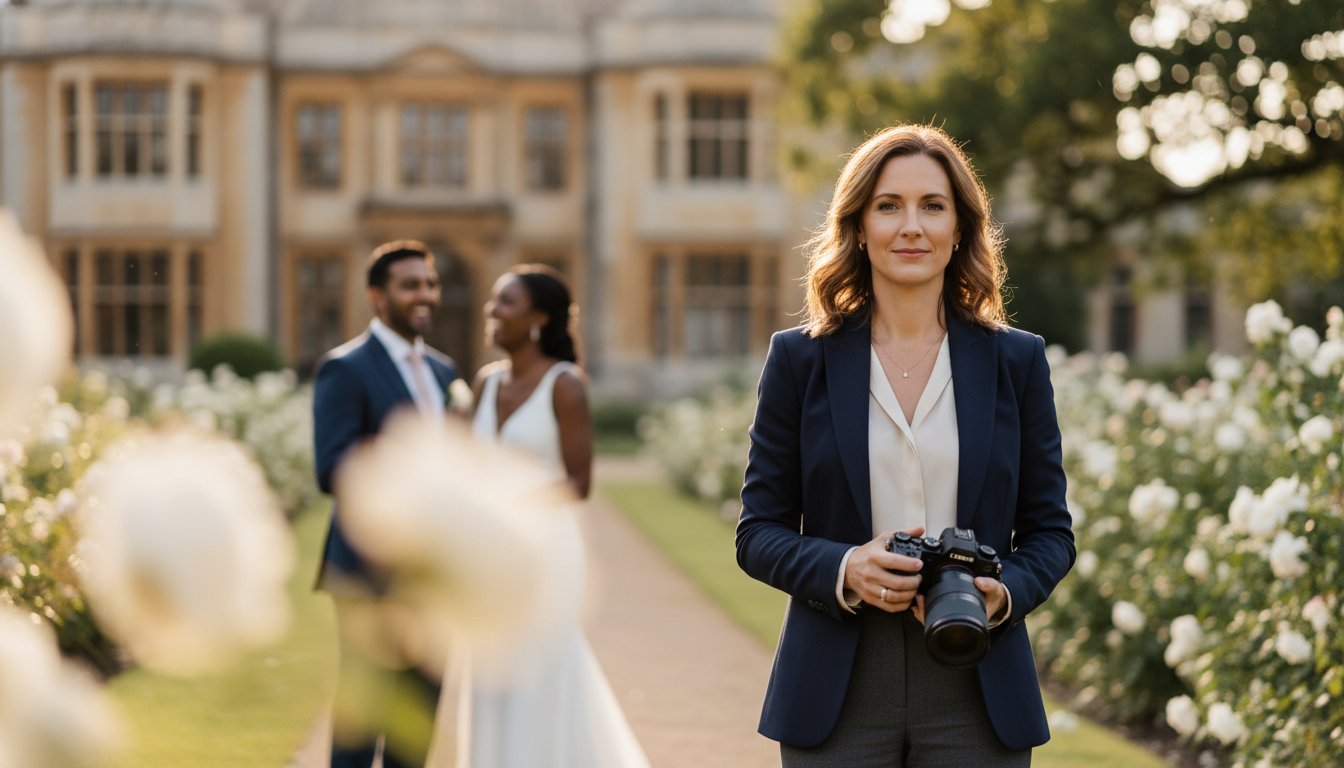
What if the factor you fear might hinder your progress-your age-is actually the secret weapon that sets you apart in a crowded market? It's entirely natural to feel a sense of trepidation when considering how to become a wedding photographer at 40, particularly when the industry often seems populated by digital natives. You may worry about catching up with rapidly evolving technology or feel anxious that building a reputable portfolio will take more time than you're willing to invest.
We understand these concerns, yet we see a different reality. At this stage of your life, you possess a level of emotional intelligence, composure, and professional discipline that younger peers often struggle to replicate. These attributes are not merely personal traits; they're a distinct competitive advantage in the high-pressure environment of a wedding day. This guide will demonstrate why your maturity is a premium asset and offer a clear roadmap for your professional transition. You'll discover how structured wedding photography courses and dedicated mentorship can help you formalise your talent and achieve high-standard results with efficiency and grace.
Key Takeaways
- Maturity serves as a premium asset in the professional wedding industry, offering the emotional intelligence and composure required to manage complex events with grace.
- Learn how to become a wedding photographer at 40 by following a structured roadmap that prioritises professional validation and skill acquisition over mere equipment accumulation.
- Modern mirrorless systems have significantly lowered technical barriers, allowing you to concentrate on the fundamental pillars of excellence: lighting, posing, and composition.
- Explore how structured wedding photography courses in the UK provide a more direct and reliable path to professional standards than self-led learning.
- Formal validation through the Institute of Wedding Photographers ensures your talent is recognised and supported by a community committed to the highest standards of the craft.
Is It Too Late to Become a Photographer at 40? Debunking the Age Myth
The notion that professional photography belongs exclusively to the young is a persistent but unfounded myth. In 2026, the wedding industry has evolved to value substance over superficiality. If you're exploring how to become a wedding photographer at 40, you'll find that your maturity is actually your greatest asset. While younger entrants might possess a native grasp of social media filters, they often lack the life experience required to manage the complex human dynamics of a wedding day. You aren't starting late; you're starting with a significant emotional and professional lead.
There's a fundamental difference between a hobbyist and a professional in the current market. A hobbyist might capture a beautiful image by chance, but a professional delivers high-standard results consistently, regardless of lighting challenges or tight schedules. Technical mastery is not a matter of age or "natural" tech-savviness; it's a matter of structured discipline. By following a wedding photography training course in the UK provided by the Institute of Wedding Photographers, you can bridge the technical gap far more quickly than you might imagine. While the history of wedding photography reveals a steady evolution of equipment, the core requirement remains a discerning eye and a steady hand.
The Reality of the Modern Photography Industry
The 2026 market has seen a distinct shift. Couples are moving away from overly staged, "perfect" imagery in favour of authentic storytelling and documentary-style coverage. This shift favours the mature photographer. The industry prioritises reliability and professional conduct over fleeting social media trends. Clients want to know their photographer will remain calm if the schedule slips or if family tensions arise. The professional landscape is one that rewards consistency and emotional depth over technical flashiness.
Why Your Past Career Is Your Secret Weapon
You don't enter this field with a blank slate. Your previous decades in the workforce have likely equipped you with essential skills that younger photographers must learn from scratch. Project management, client relations, and financial literacy are the bedrock of a successful business. If you've spent years managing expectations in an office or running a household, you're already ahead. These transferable skills provide a foundation for your new career, allowing you to focus on the craft while your professional instincts handle the business side. Treat your background as a unique selling point rather than something to hide.
The Maturity Advantage: Why Experience Wins in Professional Wedding Photography
Maturity is a premium currency in the modern wedding industry. When you're exploring how to become a wedding photographer at 40, you must recognise that your life experience provides a foundation for success that technical skill alone cannot match. A wedding is a high-stakes environment where emotions often run high. Your ability to remain composed, empathetic, and decisive is exactly what couples seek when they invest in professional services. This emotional intelligence allows you to manage complex family dynamics and unforeseen delays with a level of professionalism that inspires immediate confidence.
By this stage of your life, your aesthetic sense has been refined through decades of visual observation. You aren't merely chasing fleeting social media trends; you're looking for enduring images that capture the gravity of the occasion. Many career changers also possess the financial stability to invest in the right resources from the outset. Rather than struggling with entry-level gear, you have the capacity to secure reliable equipment and, more importantly, the high-quality instruction required to master it quickly. This focused investment in yourself is a hallmark of the mature entrant.
Mastering the Art of Client Communication
Mature photographers often build trust more effectively with high-net-worth clients who value clear, composed communication. In a service-based industry, your ability to reassure a nervous couple or coordinate a large wedding party is as important as your shutter speed. Establishing this authority is a key component of your professional vision, ensuring that you're viewed as a steady hand rather than a mere service provider. This level of rapport is often the deciding factor for couples when choosing between several talented artists.
The Discipline of Continuous Learning
While younger photographers might adopt a scattergun approach to learning, a mature professional understands the value of a structured curriculum. Relying on fragmented online tutorials often leads to gaps in fundamental knowledge that can prove costly on a wedding day. Organisations like the Professional Photographers of America emphasise the importance of formal validation and technical standards. For a serious career pivot, receiving expert critique is the fastest way to accelerate your creative growth and ensure your work meets industry expectations. If you're ready to formalise your talent, our Wedding Photography Mentorship Program offers the direct guidance needed to turn your passion into a viable business.
A Structured Roadmap for Your Career Pivot at 40
A career transition at forty requires a surgical approach rather than a scattergun one. If you're researching how to become a wedding photographer at 40, you likely understand that time is your most valuable resource. The process begins with a rigorous audit of your current competencies. You likely possess strong organisational skills and financial literacy; identify where your technical or creative gaps lie. Once these are identified, the next logical step is to prioritise structured education over the immediate purchase of expensive equipment. Investing in comprehensive wedding photography courses ensures you build a foundation of repeatable, high-standard results from the outset.
Establishing credibility quickly is essential for a mature entrant. This involves networking within established professional circles rather than seeking validation in amateur forums. Organisations such as the Professional Photographers of America (PPA) provide resources that help standardise your business practices and provide a sense of global community. Finally, seek formal validation. Entering industry-recognised awards or pursuing professional memberships signals to potential clients that your work meets a rigorous benchmark. This formal recognition transforms a passion project into a legitimate professional identity.
Choosing Your Specialism: The Power of Focus
Becoming a generalist is a common trap that dilutes your brand and suppresses your earning potential. By focusing exclusively on high-end sectors, you can refine your craft to meet specific, sophisticated client demands. Reviewing a definitive guide to modern wedding photography in 2026 can provide the niche insights required to position yourself as an expert. This specialisation allows for higher day rates and ensures you attract clients whose vision aligns with your specific aesthetic, making your workflow more efficient and your marketing more targeted.
Building a Portfolio with Purpose
A professional portfolio shouldn't be a collection of random snapshots; it must be a curated exhibition of your ability to handle a full wedding day. It needs to demonstrate mastery of lighting, posing, and narrative flow under varying conditions. Attending a dedicated Wedding Photography Portfolio Builder Workshop is often the most efficient way to generate high-calibre work under expert supervision. This approach allows you to enter the market with a body of work that reflects professional standards from day one. You don't need a hundred mediocre images. You need twenty exceptional ones that prove you can deliver when it matters most.
Overcoming Technical Barriers and Modern Gear Requirements
Technical anxiety is often the primary hurdle for those considering how to become a wedding photographer at 40. However, the shift from older DSLR technology to modern mirrorless systems has actually made the craft more accessible than ever. Unlike the steep learning curves of the past, modern cameras offer real-time exposure feedback, allowing you to see exactly how your image looks before you press the shutter. This intuitive feedback loop accelerates the learning process, letting you focus on the artistic elements that truly matter. With recent 15% tariffs on camera gear from Japan affecting major brands in 2026, making a smart, informed investment in your initial kit is more critical than ever.
When selecting your initial equipment, it's vital to choose a digital SLR for beginners or a mirrorless equivalent that offers room for growth. While gear is a necessary tool, it's never the defining factor of a professional. Mastery of the "Big Three"-lighting, posing, and composition-is what separates a high-standard professional from a casual enthusiast. Understanding foundational concepts like the principle of thirds provides a structural rigour to your work that no expensive lens can replicate. These principles remain constant even as technology evolves.
Mastering Light and Posing
Lighting remains the true differentiator in the professional wedding market. While an amateur relies on luck or bright sunlight, a professional understands how to manipulate light to create mood, depth, and flattering portraits in any environment. This expertise extends to posing, which is essential for ensuring your clients look their best during high-pressure moments. The deliberate mastery of light is the definitive hallmark of a professional photographer. It requires patience and practice to see light as a professional does, rather than just an observer.
The Role of Post-Processing in a Professional Workflow
Digital darkrooms like Adobe Lightroom and Photoshop are essential for refining your creative vision. While there is a learning curve, these tools allow you to develop a consistent visual style that becomes your professional brand. Consistency is what high-end clients pay for; they need to know the final gallery will match the portfolio they saw. Software should be treated as a tool for subtle refinement, rather than a solution for poor in-camera technique. A disciplined workflow ensures you spend more time behind the lens and less time behind a screen.
To master these essential skills under expert guidance, consider joining our intensive POSE, LIGHT & FIRE workshop to elevate your technical execution and professional standards.
Professional Validation: Institute of Wedding Photographers Pathway
Deciding to pivot your career in your fourth decade is a significant undertaking that requires more than just technical skill; it necessitates a recognized professional identity. Institute of Wedding Photographers serves as a modern guild, offering a mentor-led alternative to traditional academic routes that often lack industry specificity. For those establishing how to become a wedding photographer at 40, our structured approach prioritises the formalisation of talent through intensive, hands-on workshops. These sessions are meticulously designed for rapid skill acquisition, ensuring that your transition from a passionate enthusiast to a validated professional is both swift and disciplined.
Industry standing is built on the bedrock of external recognition and rigorous standards. Participating in the IOWP Awards provides this crucial validation, allowing you to establish a reputation within a professional community that values excellence. This sense of belonging to a modern guild offers long-term career support that self-led learning simply cannot replicate. You aren't merely learning a skill; you're joining a collective committed to the highest standards of the craft. This professional network acts as a steady hand, providing the institutional reliability needed as you build your presence in the United Kingdom market.
Mentorship vs. Self-Led Learning
Personalised feedback is the most efficient catalyst for creative growth. While online tutorials offer fragmented information, they cannot provide the expert critique necessary to correct subtle mistakes in lighting or composition that separate the amateur from the professional. The Wedding Photography Mentorship Program provides a career-changing investment, offering the direct guidance and accountability required for a successful career pivot. This human element ensures that your progression is steady and that your creative voice is refined under the watchful eye of an experienced mentor. It's the difference between guessing your way forward and following a proven path to mastery.
Next Steps: From Aspiring to Professional
The transition into the professional sphere begins with choosing the right educational framework to support your ambitions. By enrolling in professional photography courses and workshops, you secure a roadmap that leads directly to commercial viability. This journey requires a fundamental shift from a student mindset to a business-owner mindset, where every image captured is part of a broader professional strategy. When you understand how to become a wedding photographer at 40, you realise your age is not a barrier; it's the foundation of your future excellence. Your creative journey is just beginning, regardless of the calendar.
Embracing Your Creative Future
Your journey into professional photography isn't defined by the years behind you, but by the unique perspective you bring to the craft. We've explored how your maturity acts as a distinct competitive advantage, providing the emotional intelligence and professional discipline that high-end clients demand. By following a structured roadmap and focusing on the fundamental pillars of light and composition, you can successfully navigate how to become a wedding photographer at 40 with confidence and precision. The shift from a student mindset to a business-owner mindset is the final step in ensuring your second act is as commercially successful as it is creatively fulfilling.
The transition to excellence requires the right foundation and a supportive community. Through IOWP Accredited Training, national UK portfolio building events, and intensive destination workshops, we provide the formal validation needed to excel in this industry. It's time to transform your passion into a serious discipline and secure your place among the next generation of professional artists. Begin your professional journey with our Wedding Photography Mentorship Program and discover the attainable path to mastery today. Your most rewarding creative work is still ahead of you.
Frequently Asked Questions
Is 40 too old to start a photography career in the UK?
Forty is an excellent age to enter the UK photography market, particularly for those exploring how to become a wedding photographer at 40, because you possess the life experience and professional composure that younger entrants often lack. Couples planning high-end weddings frequently prefer a photographer who exhibits maturity and reliability during high-pressure events. Your background in other industries provides a unique foundation for business management and client relations. This maturity allows you to build trust with clients who value a calm, authoritative presence.
How long does it take to become a professional photographer at 40?
The timeline depends on your chosen educational path; however, a structured curriculum can significantly accelerate the process. While self-led learning might take years of trial and error, intensive wedding photography courses can help you achieve professional standards in months. By focusing on a dedicated portfolio builder workshop, you can create a body of work that attracts high-standard clients within your first year. Quality training ensures you don't waste time on unproductive habits.
Do I need a university degree to be a professional photographer?
A university degree isn't a requirement for success in the professional wedding industry. Clients and agencies prioritise the quality of your portfolio and your level of professional validation. Mentorship programs and industry-recognised memberships often provide more practical, hands-on value than a three-year academic course. Focusing on vocational excellence through a wedding photography training course in the UK is often a more direct route to commercial success.
What is the best type of photography to specialise in for a career changer?
High-ticket, service-oriented niches like wedding photography are ideal for those learning how to become a wedding photographer at 40. These sectors reward the emotional intelligence and organisational skills you've developed over decades. Specialising in a premium niche allows you to command higher rates and build a more sustainable business model more quickly than generalist photography. It's about matching your professional maturity with a market that values reliability and sophisticated storytelling.
How much does it cost to start a professional photography business at 40?
Your initial investment should be divided between reliable equipment and high-quality training. While professional-level mirrorless cameras and lenses are essential, your most valuable expenditure is the instruction that ensures you can use them effectively. It's often wiser to invest in a structured curriculum before purchasing a full suite of high-end gear. This approach ensures you only buy the equipment you truly need to deliver high-standard results for your specific clientele.
Can I balance a photography career transition with my current full-time job?
Balancing a career transition is entirely feasible when you utilise intensive, short-duration workshops and mentorship programs. Many successful professionals begin by shooting at weekends while refining their skills through evening study. This phased approach provides financial security while you build the necessary portfolio to transition into photography full-time. It's about working smarter by choosing high-impact learning opportunities that fit around your existing professional commitments and personal responsibilities.
Do clients care about the age of their wedding photographer?
Clients prioritising excellence care about your results, your professionalism, and how you make them feel on their wedding day. Age often translates to a sense of authority and calm that reassures nervous couples during stressful moments. When you present a portfolio that meets industry standards, your maturity is viewed as a sign of reliability and prestige. Most high-end clients view a mature photographer as a stable, experienced professional who can handle any situation.
What essential equipment do I need to start taking professional photos?
You'll need a modern mirrorless camera body, a versatile prime lens, and a reliable lighting setup to meet professional standards. Redundancy is also critical in wedding photography; having a secondary camera body is a fundamental requirement for any paid event. Focus on acquiring gear that supports the high-standard results taught in professional workshops rather than chasing every new release. Quality over quantity ensures your kit remains reliable throughout a long wedding day.