
Using Flash Creatively at Weddings: A Professional Guide to Mastering Light
What if the most challenging lighting conditions were actually your greatest opportunity to distinguish your portfolio from the competition? Many photographers view the arrival of a dim reception or a grey UK winter afternoon with a sense of trepidation, fearing that artificial light will strip away the genuine atmosphere of the day. It's a common frustration to feel that your professional standards are at the mercy of a venue's poor illumination; however, using flash creatively at weddings is not merely a corrective measure for darkness.
Instead, it is a sophisticated brush for painting depth and drama into every frame, transforming a flat scene into a cinematic gallery. This guide provides a structured path to mastering light, from the high-contrast paparazzi style trending in 2026 to the subtle nuances of off-camera balance. You will discover how to move beyond the limitations of natural light to create a signature look that attracts higher-paying clients. We shall explore the technical discipline and artistic intuition required to ensure you remain a steady hand in any environment, elevating your craft from accidental capture to intentional artistry.
Key Takeaways
Move beyond the "natural light only" limitation to embrace flash as a sophisticated tool for enhancing atmosphere and professional reliability.
Gain technical clarity on the Inverse Square Law and the strategic choice between TTL and manual modes to maintain consistency across varying environments.
Discover the specific steps for using flash creatively at weddings, such as dragging the shutter and backlighting, to create high-impact, artistic imagery.
Establish a seamless on-site workflow that incorporates venue scouting and discreet setups, ensuring you capture every moment without intruding on the celebration.
Learn how professional mentorship and structured training can accelerate your path to mastery, helping you build a portfolio that attracts high-value clients.
Table of Contents
Beyond Natural Light: Why Mastering Flash is a Professional Necessity
The Technical Foundation: On-Camera vs. Off-Camera Creative Strategies
Executing Flash Creativity Under Pressure: A Wedding Day Workflow
Refining Your Vision with the Institute of Wedding Photographers
Beyond Natural Light: Why Mastering Flash is a Professional Necessity
For many practitioners, the "natural light" label serves as a badge of authenticity, yet in a professional context, it can often become a restrictive boundary. Mastering the art of using flash creatively at weddings isn't about overpowering the sun or erasing the venue's character; it's about the intentional manipulation of light to enhance mood and narrative. While natural light is a gift when it's available, a true professional treats light as a variable they control rather than a condition they simply endure. This shift in mindset moves flash from a backup plan to a primary creative choice, ensuring that your artistic vision is never compromised by external factors. It is a fundamental discipline for any serious career path.
In the unpredictable climate of the UK, where a bright summer afternoon can transition into a dark, overcast ceremony within minutes, flash provides the stability required for a high-end gallery. It transforms the flash unit from a corrective device into a storytelling tool, allowing you to sculpt shadows and highlights that natural light cannot provide. For those seeking a comprehensive guide to flash photography, it's essential to view these tools as an extension of your creative vision rather than a technical burden. The "natural light only" label can severely limit your professional growth and booking potential, as it signals to high-end clients and planners that your skills are weather-dependent. Reliability is a cornerstone of professional validation.
The Limitations of Natural Light Purism
Relying on high ISO settings to compensate for poor ambient light often results in "muddy" files, where shadow detail is lost to digital noise and skin tones lose their vibrancy. Modern hotel suites, while often beautifully decorated, frequently suffer from flat, overhead lighting that fails to flatter the subjects or the environment. By introducing controlled artificial light, you elevate your work above the entry-level standard, providing clients with the crisp, professional finish they expect from a high-tier investment. This technical discipline ensures that your work remains resilient even in the most challenging lighting scenarios, such as the dim interiors of traditional stone churches or contemporary windowless ballrooms.
Flash as a Creative Signature
Developing a lighting style that remains consistent regardless of the weather is a hallmark of the elite wedding photographer. You can use light to direct the viewer’s eye, creating focus in cluttered bridal prep rooms or adding a sense of three-dimensional depth to a reception hall. When you visualise the final frame, flash allows you to highlight the colour and texture of a bridal gown in a way that flat, ambient light often misses. This level of control is central to mastering the craft within the Institute of Wedding Photographers and establishing a visual signature that resonates with discerning couples. When using flash creatively at weddings, you are no longer just a witness to the light; you are its architect.
The Technical Foundation: On-Camera vs. Off-Camera Creative Strategies
Mastering the physics of light is what separates a technician from an artist. The Inverse Square Law is the most critical concept to grasp; it dictates that light intensity decreases inversely with the square of the distance from the source. In a practical wedding scenario, this means that moving your subject just a few feet away from your flash can cause a significant drop in exposure. Understanding this allows you to place your lights with surgical precision, ensuring your subjects are perfectly illuminated while the background retains its natural character. It prevents the dreaded "black background" look that often plagues amateur work.
When deciding between TTL and Manual modes, you must consider the pace of the event. TTL (Through The Lens) metering is invaluable during fluid moments like the bridal procession, where distances change rapidly and you need the camera to make split-second calculations. However, for portraits or receptions where the environment is stable, switching to Manual mode provides the consistency required for a professional gallery. This level of control is a central theme in our wedding photography courses, where we encourage students to move beyond automated settings to achieve a deliberate visual style.
Elevating On-Camera Flash
Bouncing light is more than just hitting a ceiling; it's about finding the right angle to create a large, soft source that mimics a window. Use tools like the "black foamie thing" or similar flags to block direct light spill from hitting the subject, ensuring only the bounced, soft light reaches them. While soft light is traditional, the current trend for direct, "paparazzi" style flash offers a high-contrast, editorial look that many modern couples now request for their evening celebrations. Choosing the right modifiers, such as MagMods or small softboxes, allows you to shape this light without carrying bulky equipment through a crowded venue.
The Power of Off-Camera Flash for Depth
Off-camera flash is where true three-dimensional depth is born. By separating the light source from the lens axis, you create shadows that define form and texture. Cross-lighting, where two flashes are placed on opposite sides of a dancefloor, is one of the most effective creative flash techniques for wedding receptions, providing a dynamic rim light that makes subjects pop from the background. Using flash creatively at weddings requires a reliable trigger system to manage multiple groups, allowing you to adjust power levels from your camera without breaking your connection with the couple. This technical foundation ensures your work remains high-end, regardless of the venue's inherent lighting challenges.
Advanced Techniques for Creative Impact at Weddings
The transition from technical proficiency to artistic mastery occurs when you stop reacting to light and begin designing it. While many practitioners focus on simply "surviving" a dark reception hall, using flash creatively at weddings allows you to proactively construct a visual narrative that feels intentional rather than accidental. This involves moving beyond basic illumination to employ advanced techniques that define your professional signature. If you're still refining your core settings, reviewing Wedding Photography Flash Basics can provide the necessary groundwork before attempting these more complex, high-impact setups.
Shutter Dragging for Dynamic Reception Energy
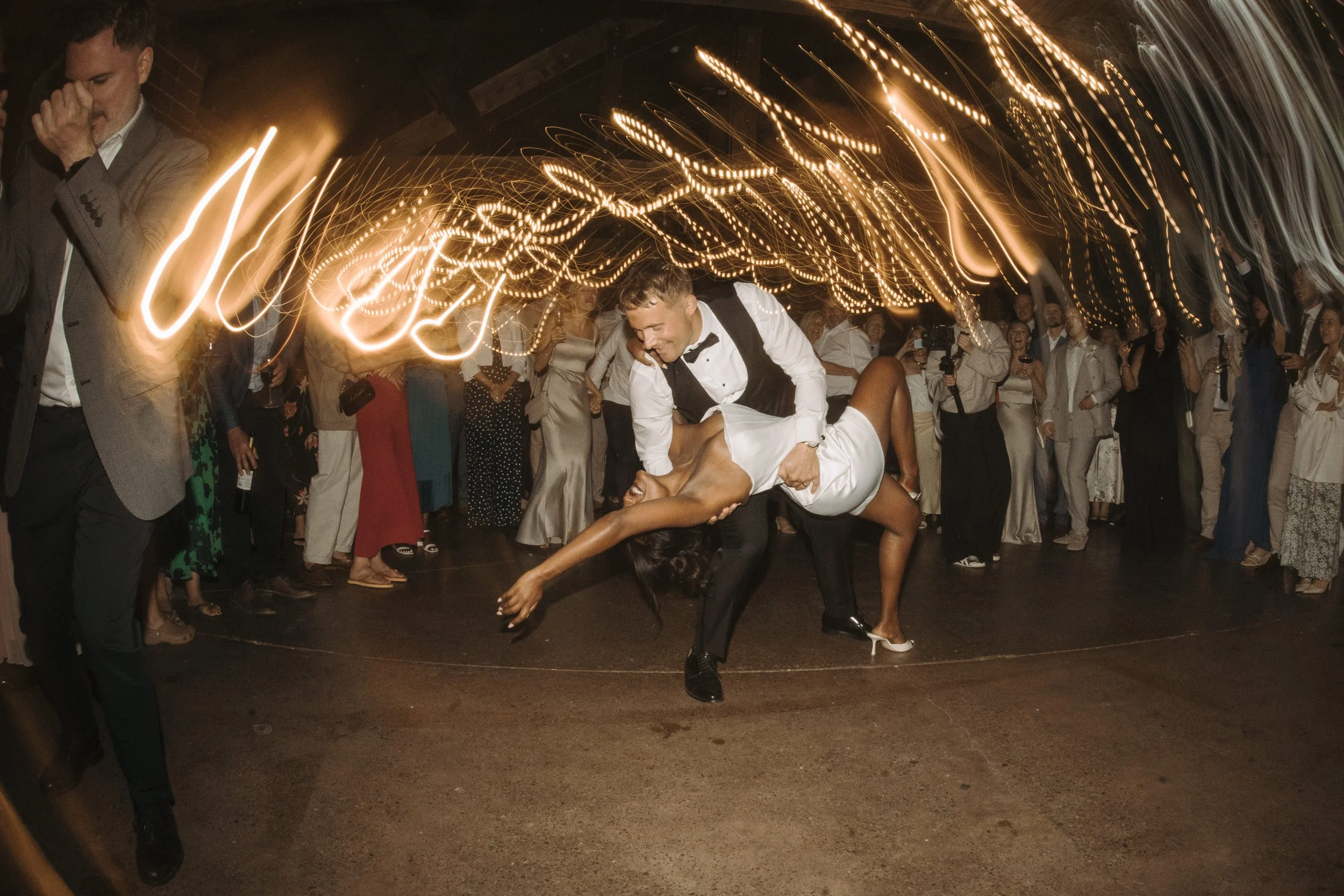
Capturing the vibrant energy of a dancefloor requires a sophisticated balance of exposure settings. Shutter dragging involves using a slow shutter speed, typically between 1/10 and 1/25 of a second, alongside a sharp burst of flash. The flash freezes the primary subjects in crisp detail, while the slow shutter allows the ambient glow and movement of the party to "bleed" into the frame. For a more abstract or editorial result, you can use intentional camera movement (ICM) during the exposure. Rotating the camera or zooming the lens creates rhythmic light trails that wrap around the couple, capturing the atmosphere of the celebration without sacrificing the clarity of the moment. It's a deliberate technique that separates a chaotic image from a cinematic one.
Rim Lighting and Silhouettes
Creating "hero" portraits often relies on rim lighting to separate the couple from a dark or cluttered background. By positioning a flash directly behind the subjects, you create a luminous "halo" effect that highlights their profile and adds a sense of three-dimensional drama. This technique is particularly effective when used in conjunction with architectural features or sunset skies to create impactful silhouettes. You must ensure the background remains brighter than the subject's face to maintain the silhouette's integrity. Such artistic choices are central to the curriculum at the Institute of Wedding Photographers, as they transform a standard portrait into a piece of fine art.
To further refine these scenes, consider the strategic use of colour gels. A CTO (Colour Temperature Orange) gel can warm up the flash to match the golden hour or indoor tungsten lighting, preventing the subject from appearing unnaturally cool. Conversely, CTB (Colour Temperature Blue) gels can be used for creative temperature shifts to add mood to a night scene. These advanced steps, as outlined in The Definitive Guide to Modern Wedding Photography, ensure your portfolio remains versatile and highly sought after by clients who value a sophisticated, high-end aesthetic.
Executing Flash Creativity Under Pressure: A Wedding Day Workflow
Using flash creatively at weddings requires more than technical knowledge; it demands a tactical approach to the wedding day schedule. The pressure of a live event can often lead to "safe" rather than "inspired" choices. To avoid this, your workflow must begin long before the first dance. Identifying lighting opportunities during an initial venue walk-through allows you to visualise your "hero" shots without the distraction of a ticking clock. Look for reflective surfaces, interesting architectural shadows, or areas where a backlight could create a cinematic glow. This proactive scouting ensures that when the light fades, your creative plan is already in motion.
Discreet Setup: Minimising Gear Friction
The most successful lighting designs are often those that the guests never notice being built. The wedding breakfast provides a critical window for setting up off-camera equipment. By using compact stands and lightweight speedlights, you can position your gear in corners or behind floral arrangements to remain virtually invisible. A reliable assistant is invaluable here, as they can adjust light placement and power levels while you remain focused on capturing candid moments. Transitioning between scenes becomes effortless when you use quick-change magnetic modifiers, allowing you to move from a soft-box portrait to a direct-flash dancefloor shot in seconds.
Communication with the couple is equally vital during dedicated creative sessions. Briefly explain the vision behind a specific setup to ensure they feel like active participants in the artistic process rather than subjects of a technical experiment. Should a trigger fail or a battery die, maintaining a composed, professional demeanour is essential. Always carry redundant systems on your person; a secondary trigger and a fresh set of high-capacity batteries can save a session from a technical stall. If you wish to refine your on-site efficiency and technical resilience, consider enrolling in our wedding photography training course in the UK.
Maintaining Consistency Throughout the Gallery
A common challenge is ensuring the transition from natural light prep to a flash-heavy reception feels like a single, cohesive story. To maintain a "natural" brand identity while using artificial light, you must match the colour temperature of your flash to the ambient room light. Using orange or blue gels allows the flash to blend seamlessly with the warm glow of candlelight or the cool tones of twilight. Maintaining a consistent aesthetic when using flash creatively at weddings is what separates a professional portfolio from a collection of snapshots. In post-processing, harmonising these shots involves balancing the white balance and contrast levels so that the artificial light mimics the direction and quality of the day's earlier natural light. This attention to detail ensures your gallery remains sophisticated and consistent, regardless of the lighting environment.
Refining Your Vision with the Institute of Wedding Photographers
Mastering the complexities of artificial light is a journey that often begins with solitary experimentation, yet the path to true professional validation is rarely walked alone. While the technical foundations and advanced techniques discussed previously provide the necessary tools, the refinement of your artistic vision requires a more structured approach. The Institute of Wedding Photographers serves as a guardian of these industry standards, offering a curriculum designed to transform talent into a sustainable, high-end career path. By engaging with formal education, you move beyond the limitations of being self-taught, ensuring that your work meets the rigorous criteria expected of a modern professional certifying body.
Mentorship and Structured Learning
Transitioning from a natural light practitioner to a photographer capable of using flash creatively at weddings involves a significant shift in both technical discipline and creative confidence. Our wedding photography training dates in the UK provide opportunities for hands-on learning in diverse environments, from historic manor houses to contemporary urban spaces. This structured environment allows for immediate, personalised feedback, which is essential for correcting subtle errors in light placement or colour balancing. Professional mentorship offers a steady hand during this growth, providing a safe space to refine your techniques before you ever step onto a high-stakes wedding floor.
Competitive Advantage Through Mastery
In an increasingly saturated digital landscape, the ability to produce a consistent, high-impact gallery in any lighting condition is your most significant competitive advantage. Mastery of light doesn't just improve your imagery; it elevates your brand's perceived value, allowing you to command premium professional fees that reflect your expertise. Discerning couples seek the peace of mind that comes with hiring a certified professional who can guarantee excellence regardless of a venue's inherent challenges. Reliability is a cornerstone of commercial success.
Building a portfolio that demonstrates both technical precision and artistic flair is the first step toward achieving industry recognition. Through the IOWP awards and membership, our students gain access to a community of high-standard wedding photographers who value discipline and the formalisation of talent. This recognition serves as a hallmark of quality, distinguishing your portfolio in a crowded market and validating your status as a master of the craft. If you're ready to formalise your talent and join a modern professional guild, we invite you to explore our photography courses and workshops. The journey toward using flash creatively at weddings is a patient process, but the results are a permanent asset to your professional identity.
Elevating Your Artistry Through Technical Mastery
Transitioning from a photographer who merely reacts to light to one who intentionally designs it is the hallmark of a true professional. We've explored how the technical discipline of off-camera flash and advanced shutter dragging can transform a mundane reception into a cinematic experience. By using flash creatively at weddings, you ensure your portfolio remains resilient against the unpredictable nature of UK venues, providing a consistent, high-end signature that discerning clients value. This level of control is what separates a stable, successful career from a hobbyist's pursuit.
The path to this level of mastery is most effectively navigated through structured, guided instruction. The Institute of Photographers provides the framework needed to formalise your talent through hands-on portfolio building and UK-wide training events. With the support of IOWP Accredited Mentors, you can move beyond self-taught limitations to achieve a recognised standard of excellence. Master your lighting with our professional wedding photography courses and take the definitive step toward a more versatile, prestigious career. Your journey from witness to architect of light begins with a commitment to your own creative growth.
Frequently Asked Questions
Is on-camera flash or off-camera flash better for creative wedding photography?
Both on-camera and off-camera flash serve distinct purposes in a professional workflow. Off-camera flash is superior for creating three-dimensional depth and dramatic "hero" portraits by separating the light source from the lens axis. Conversely, on-camera flash is indispensable for its mobility during fast-paced segments like the drinks reception. Using flash creatively at weddings often involves a hybrid approach, alternating between these methods as the situation demands.
How do I avoid the "deer in headlights" look when using flash?
To avoid the "deer in headlights" look, you must prevent harsh, direct light from striking your subject's face at a flat angle. Bouncing the flash off a neutral wall or ceiling creates a much larger, softer light source that mimics natural window light. If bouncing isn't an option, use a modifier like a small softbox or a dome diffuser to scatter the light, ensuring it wraps around the subject's features rather than flattening them.
What are the best flash settings for a dark wedding reception?
The ideal settings for a dark reception involve balancing your flash power with the ambient exposure to maintain the venue's atmosphere. Start by setting your camera to expose for the room's background lights, then introduce flash in Manual mode at a low power setting, such as 1/64 or 1/128. This provides just enough illumination to sharpen the subjects without overpowering the natural glow of the environment.
Can I use flash during the wedding ceremony?
Use of flash during the ceremony is generally restricted and requires prior permission from the officiant. Many religious venues and registrars prohibit artificial light to preserve the solemnity of the occasion. It's vital to discuss this with the couple and the venue staff during your pre-wedding scouting. If allowed, ensure your flash is used discreetly and at a very low power to avoid distracting the guests or the couple.
Do I need expensive studio lights for creative wedding portraits?
You don't need expensive studio strobes to achieve professional results; high-quality speedlights are often more than sufficient. Modern speedlights provide enough power for most wedding scenarios and offer the portability required for a long day. Investing in a reliable trigger system and a few versatile modifiers will provide more creative value than heavy, cumbersome studio equipment that might hinder your mobility.
How do I balance flash with the sunset during golden hour?
Balancing flash with the sunset requires exposing your camera for the sky first, then using the flash to "fill" the light on your subjects. This prevents the couple from becoming a silhouette while ensuring the vibrant colours of the sunset aren't lost to overexposure. Using flash creatively at weddings during golden hour often involves using a CTO gel to match the warm, orange hues of the setting sun.
What is shutter dragging and how does it work?
Shutter dragging is a technique where you use a slow shutter speed alongside a flash burst to capture both motion and a sharp subject. The flash freezes the person in the frame, while the open shutter allows ambient light and movement to create light trails or a sense of energy. It's a sophisticated way to document the dancefloor, turning a dark room into a dynamic, colourful scene.
How many flashes do I need for a typical wedding setup?
A standard professional setup typically includes two to three flashes. One unit remains on-camera for mobility, while two additional units can be placed on stands for off-camera lighting, such as cross-lighting the dancefloor or creating a rim light for portraits. This configuration provides enough versatility to handle almost any lighting scenario without making your workflow overly complex or intrusive for the guests.