
Mastering Off-Camera Flash for Wedding Photography: A Professional’s Guide
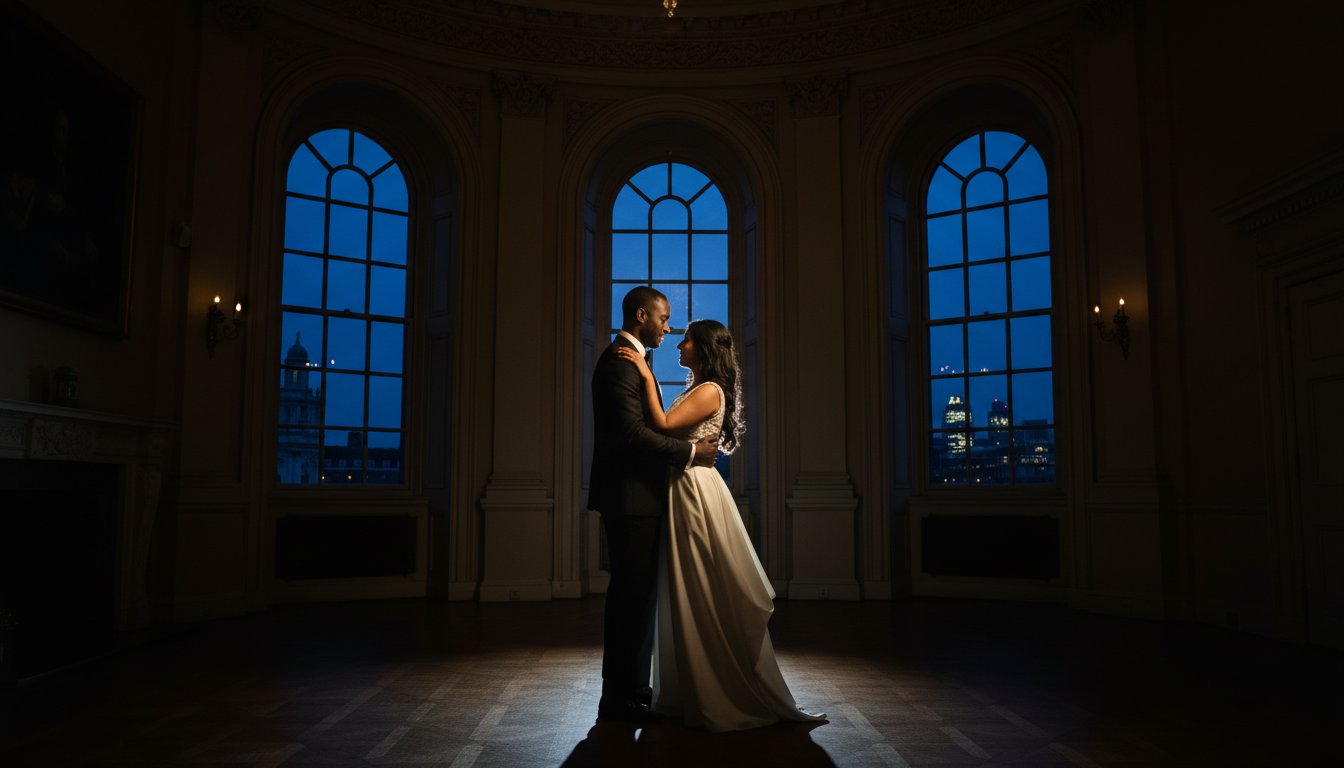
Imagine standing in a Grade II listed barn at 8:00 PM, watching the couple prepare for their first dance while knowing your current equipment cannot overcome the cavernous, dark ceiling. For many, the transition to using off-camera flash for wedding photography feels like a gamble where a single technical error could result in a missed moment or a flat, uninspired image. It's a common hurdle that distinguishes a competent photographer from a true master of the craft.
We understand that the pressure of a live event often leads professionals to rely on safe, ambient light, even when the results lack the depth required for a high-end portfolio. This guide provides the structured guidance needed to transform your approach, allowing you to achieve consistent, high-quality results regardless of the venue's limitations. You'll learn to refine your technical mastery and command light with the precision expected of a recognised professional. We shall examine the essential gear configurations and lighting patterns that will elevate your work and provide the confidence to handle the most challenging environments with ease.
Key Takeaways
- Learn how to transcend the constraints of natural light to establish a signature aesthetic that provides a distinct professional edge.
- Identify the optimal balance between power and portability when selecting speedlights or monolights for off-camera flash for wedding photography.
- Master sophisticated reception setups, including cross-lighting techniques, to produce images with exceptional depth and visual separation.
- Refine your ability to create striking environmental portraits and 'Hero Shots' worthy of industry accolades and prestigious wedding photography awards.
- Discover why expert mentorship and structured feedback are essential for moving beyond technical plateaus toward a level of recognised distinction.
Elevating Your Professional Vision with Off-Camera Flash
Relying on the unpredictability of natural light often restricts a photographer's commercial reach within the competitive wedding sector. While the soft glow of a late summer afternoon is a gift, a professional's reputation is built on the ability to deliver exceptional results regardless of the environment. Mastering off-camera flash for wedding photography transforms you from a reactive observer into a proactive director of light. This shift allows you to command the environment, ensuring that a windowless reception hall or a rainy winter afternoon becomes a canvas for technical excellence rather than a compromise in quality.
Developing a signature style requires a deliberate approach to lighting that distinguishes your brand from the saturated market of natural light enthusiasts. This "Professional Edge" isn't merely about brightness; it's about control. When you command the light, you create a consistent visual narrative that clients recognise as your unique hallmark. Client confidence increases significantly when they observe a photographer handling complex equipment with ease. A 2023 industry report indicated that photographers who demonstrate high technical proficiency are 40% more likely to secure bookings for luxury venues where lighting conditions are notoriously difficult.
The Distinction Between Mastery and Hobbyism
The Institute standard for professional photography requires unwavering consistency across an entire wedding day. A hobbyist might produce a handful of stunning shots in ideal conditions, but a professional ensures every frame meets a rigorous benchmark through the expert application of off-camera flash for wedding photography. By understanding flash photography, you gain the ability to create three-dimensional depth, using light to sculpt the subjects and separate them from the background. This creates a cinematic quality that separates professional portfolios from amateur collections. Whether you're working in a dark cathedral or a bright garden, your ability to standardise your output defines your status in the industry.
Identifying the Need for Artificial Light
Recognising when to introduce artificial light is a core skill taught within our Academy programmes. While modern cameras boast impressive high-ISO performance, pushing a sensor to its limits often introduces digital noise that degrades the final print. A sophisticated flash setup maintains image integrity while preserving the atmosphere. The goal isn't to overpower the scene but to refine it. Establishing a fluid workflow ensures that technical adjustments don't disrupt the creative process. This allows you to stay present during emotional moments while knowing your technical foundation is secure. It's about moving beyond the limits of on-camera bounce flash to achieve a truly polished, professional finish.
The Essential Toolkit for Off-Camera Flash Mastery
The transition from on-camera bounce flash to a dedicated off-camera system represents a significant milestone in a photographer's technical progression. Achieving mastery requires a deliberate selection of tools that balance power with the frantic pace of a wedding day. Speedlights remain the industry standard for their agility; however, many professionals now integrate battery-powered monolights to overcome the limitations of ambient light. A typical 500Ws monolight provides roughly three stops more power than a standard speedlight, allowing you to overpower the midday sun or illuminate large banquet halls with ease. This versatility is why off-camera flash for wedding photography has become a hallmark of the high-end professional.
Reliability hinges on the synchronisation between your camera and the remote units. Modern 2.4GHz radio triggers have replaced older infrared systems, offering a range of up to 100 metres and eliminating line-of-sight issues. For those seeking to refine their craft, the Institute recommends investing in a transceiver system that allows for remote power adjustment. This functionality reduces the need to physically walk to each light stand during a ceremony, maintaining the dignity and flow of the event. Stable supports are equally critical. While heavy-duty stands are necessary for monolights, a lightweight carbon-fibre monopod used by an assistant, often referred to as a 'valet' light, provides the mobility required for dynamic portraits.
Selecting Professional Grade Equipment
Choosing between TTL and Manual modes is a strategic decision. TTL serves as a responsive starting point for candid moments where the distance between subject and flash changes rapidly. Conversely, Manual mode offers the shot-to-shot consistency required for formal portraits. High-Speed Sync (HSS) is another non-negotiable feature for the modern professional. It enables flash synchronisation at shutter speeds exceeding 1/200th of a second, which is essential for maintaining a shallow depth of field in bright outdoor environments. Battery management is equally vital. Professional lithium-ion packs now offer over 450 full-power flashes per charge, ensuring your equipment remains operational throughout a 12-hour commission.
Light Modifiers and Their Effects
The character of light is defined by the modifier you choose. Large octaboxes produce a soft, flattering wrap ideal for bridal portraits, while grids are used to restrict light spill, adding drama to the first dance. Portability is a key consideration; modifiers that utilise a 'pop-up' mechanism can be deployed in under 30 seconds, preserving the momentum of the day. Using off-camera flash for wedding photography effectively also requires an understanding of colour temperature.
Effective use of colour correction gels is a hallmark of the disciplined professional. By matching your flash to the warm tungsten glow of a historic venue, you avoid the jarring blue cast often seen in amateur work. This technique is particularly useful when shooting reception details with off-camera flash, as it preserves the authentic atmosphere of the room. Developing these technical instincts is a core component of our photography courses and workshops, where we bridge the gap between artistic theory and commercial execution.
Strategic Lighting Setups for the Wedding Reception
The transition to the wedding breakfast and evening celebrations demands a shift in technical strategy. Achieving a professional edge requires mastering the cross-lighting technique. By placing two remote units at opposite corners of the room, typically at 45-degree angles to the dance floor, you create a three-dimensional quality that on-camera units cannot replicate. This setup ensures that subjects are separated from the background, a vital component for those seeking a professional distinction in wedding photography. This method provides a consistent light wrap, allowing you to move freely while maintaining a balanced exposure across the ballroom.
Managing these multiple units is best handled through a single master controller mounted on your camera's hot shoe. This device allows you to adjust power levels for different groups instantly, ensuring you don't have to disrupt the guests to manually tweak a flash head. For those refining their technical workflow, consulting a complete guide to off-camera flash provides a robust foundation for understanding channel and group assignments. In a busy reception, the ability to toggle Group A for the cake cutting and Group B for the wider room shots is essential for efficiency.
Lighting the First Dance and Speeches
To make the couple truly stand out, place one flash directly behind them to act as a rim light. This creates a sophisticated halo effect that separates dark suits and hair from a dim background. You'll need to balance this with the DJ’s lighting; a shutter speed of 1/60th or 1/100th of a second usually allows enough ambient colour to bleed into the frame, preserving the party’s atmosphere. Positioning the off-camera flash for wedding photography at a 90-degree angle from the lens axis eliminates the risk of red-eye and prevents the flat, unflattering shadows often produced by direct on-camera light.
Navigating Challenging Venue Interiors
Traditional British venues, such as 17th-century oak-panelled barns or Grade II listed manors with 30-foot ceilings, present significant obstacles for light bouncing. When a ceiling is too high or too dark to reflect light, you must rely on direct, modified OCF. Using a small softbox or a magnetic diffusion dome helps soften the output while highlighting the architectural grandeur of the stone arches or timber beams. Safety is paramount in these crowded environments. Use weighted light stands or compact Manfrotto Nano stands tucked behind floral arrangements or pillars to ensure your equipment remains secure and unobtrusive as guests move toward the dance floor.
Creative Portraits and Portfolio-Building Techniques
Mastering off-camera flash for wedding photography allows you to transition from a passive observer to a creative director. You aren't simply documenting the day; you're crafting a visual narrative that natural light alone cannot provide. Environmental portraiture requires a sophisticated balance between the vastness of a landscape and the intimacy of the couple. By underexposing the ambient sky by 1.5 stops and using a remote strobe to illuminate your subjects, you create a three-dimensional pop that defines professional excellence. A 2023 industry survey revealed that 68% of high-end wedding clients prioritise photographers who demonstrate this specific technical mastery, as it ensures high-quality results regardless of weather or venue limitations.
The battle between the sun and your flash is most prominent during the golden hour. While natural light is beautiful, it often lacks the directionality needed for high-contrast portraits. Using a fill flash at a low power setting, perhaps 1/64 or 1/128, retains the soft glow of the evening while adding a catchlight to the eyes. This technique prevents the "muddy" skin tones that often occur when shooting directly into a sunset, ensuring your images maintain a clean, professional finish that appeals to discerning couples.
Crafting the Award-Winning Hero Shot
High-impact images serve as the cornerstone of a premium brand. Techniques such as dramatic backlighting or "rim lighting" create a striking silhouette that often secures recognition in wedding photography awards. If the British weather fails to provide a sunset, you can replicate the effect by placing a flash with a 1/2 CTO (Colour Temperature Orange) gel behind the couple. This artificial "golden hour" ensures you deliver a signature shot every time, building a portfolio that looks expensive and meticulously planned.
Lighting for Texture and Detail
Macro photography demands precision. To highlight the intricate details of rings, shoes, or table settings, you should apply the 45-degree rule. Placing a single off-camera flash at this angle creates delicate shadows that reveal the texture of lace or the facets of a gemstone. Using a honeycomb grid is essential here; it narrows the beam to a specific point, preventing light from spilling onto the background. This disciplined approach ensures a cohesive gallery where the detail shots feel as considered as the portraits themselves.
Refining Your Technique through Professional Mentorship
Mastery of light isn't a destination; it's an ongoing process of refinement that requires more than just trial and error. Many practitioners find that self-led learning eventually leads to a technical plateau where progress feels stagnant. While digital resources offer a convenient starting point, they lack the personalised critique necessary to correct deep-seated habits. This is particularly true when refining your use of off-camera flash for wedding photography, where the margin for error during a live ceremony is non-existent.
Tutor-led feedback is the catalyst for genuine growth. An experienced eye can identify subtle lighting errors, such as improper fall-off, harsh shadow transitions, or mismatched colour temperatures, that you might overlook in the heat of a wedding day. Engaging in immersive photography courses and workshops provides a controlled environment where you can experiment, fail safely, and learn rapidly. The difference between a standard image and a professional masterpiece often lies in the final five percent of technical execution. Without a mentor to point out the nuance of shadow density or the spill of a rim light, your work may remain "good" rather than exceptional.
This structured approach moves you from basic competence to a level where creative lighting becomes an intuitive response. When you no longer have to consciously calculate the physics of your gear, you're free to focus on the raw emotion of the moment. Industry observations suggest that photographers who commit to formal mentorship programmes increase their technical proficiency and confidence up to 60% faster than those who work in isolation.
The Benefits of Structured Learning
Online tutorials offer accessibility, but they can't replicate the physiological memory gained from a live shoot. Attending wedding photography training dates in the UK allows for real-time adjustments and immediate expert feedback. This interaction is essential for developing a recognisable photographic voice that stands out in a crowded market. Gaining formal accreditation through a professional Academy also provides a mark of distinction, validating your expertise to high-end clients who demand consistent, high-quality results.
Taking the Next Step in Your Career
To truly master off-camera flash for wedding photography, you must commit to integrating these techniques into every commission. Develop a plan to practice specific lighting setups until they become second nature. Set clear goals for your portfolio development, aiming for a consistent aesthetic that reflects your unique brand. The transition from a hobbyist to a master is defined by the discipline of light and the pursuit of excellence. By choosing a path of structured improvement, you ensure that your technical skills remain as sharp as your creative vision.
Refining Your Professional Distinction in Wedding Lighting
Mastering the technical nuances of lighting separates the standard practitioner from the industry leader. By refining your essential toolkit and applying strategic setups during the reception, you transform unpredictable environments into controlled, artistic spaces. This command of off-camera flash for wedding photography allows you to deliver a consistent, high-standard portfolio regardless of the venue's inherent lighting challenges. It's about moving beyond basic illumination to achieve a signature style that defines your professional brand.
The Institute provides a structured path to this level of excellence through our specialised curriculum. Our training is recognised by the International Organization of Wedding Photographers, ensuring your skills meet rigorous global benchmarks. You'll benefit from direct, tutor-led feedback from 3 industry masters and participate in portfolio-building sessions at 5 prestigious national venues. These opportunities are designed to help you achieve a level of distinction that resonates with high-end clientele.
Elevate your craft and join our next Wedding Photography Workshop
The transition from hobbyist to master requires discipline and expert critique. We look forward to supporting your progress as you develop the confidence to lead any shoot with creative authority.
Frequently Asked Questions
Is off-camera flash necessary for every wedding?
While not every moment requires additional lighting, off-camera flash for wedding photography is essential for maintaining professional standards across 100% of your portfolio. It provides the creative control needed when natural light fails, particularly during winter ceremonies in the UK where daylight often vanishes by 4:00 PM. Relying solely on available light can limit your ability to produce the crisp, high-contrast imagery that defines a modern professional aesthetic.
How many flashes do I need for a typical wedding reception?
You should ideally utilise two to three flash units to adequately cover a standard reception venue. This configuration allows you to place two lights in opposing corners of the dance floor, providing a consistent rim light for 360 degrees of movement. Having a third unit available ensures you can light the cake or top table separately, maintaining a balanced exposure throughout the 4 or 5 hours of evening celebrations.
Should I use TTL or Manual mode for off-camera flash?
Manual mode is the preferred choice for 90% of off-camera work because it ensures total exposure consistency between frames. While TTL offers speed, it's easily fooled by white wedding dresses or dark suits, leading to exposure fluctuations of up to 1.5 stops. By setting your power levels manually, you gain the disciplined control required to refine your lighting style and achieve a predictable, high-quality result in every shot.
What is the best way to carry light stands during a wedding?
The most efficient method for transporting equipment is a dedicated rolling case or a compact shoulder bag designed for 3 or 4 stands. Choosing carbon fibre models can reduce your total kit weight by approximately 2.5 kilograms, which is a significant advantage during a 12-hour wedding day. Many professionals also utilise strap systems that allow them to carry a single stand comfortably while moving between the ceremony and the reception.
Can I use off-camera flash if I don't have an assistant?
You can certainly manage off-camera lighting without an assistant by employing sturdy, weighted light stands. It's vital to use 5kg sandbags or floor weights to secure your equipment, especially in venues where 100 or more guests are moving around the dance floor. This self-reliant approach requires more preparation during the setup phase, but it allows you to maintain your professional edge while working as a solo practitioner.
How do I avoid making my flash photos look 'fake' or over-processed?
To prevent a synthetic appearance, you must balance your flash output so it complements rather than overpowers the existing light. Aim to keep your flash power approximately 1 or 2 stops lower than the ambient exposure to preserve the warmth of the venue's lamps. Using modifiers like softboxes or umbrellas will diffuse the light, creating soft transitions that mimic the natural fall-off of light found in high-end editorial photography.
What are the best radio triggers for professional wedding photographers?
The Godox XPro and the Profoto Air Remote are the two most recognised systems used by professionals today. These triggers utilise 2.4GHz radio frequencies to provide a reliable connection at distances of up to 100 metres, even through walls or around corners. Investing in these robust systems ensures that your off-camera flash for wedding photography fires 100% of the time, preventing missed moments during critical segments like the first dance.
How do I balance flash with the ambient light in a dark venue?
Balancing flash in dark environments requires a technique known as dragging the shutter, where you set your shutter speed to 1/60th or 1/30th of a second. This allows the camera sensor to absorb the ambient glow of the room while the flash freezes your subjects with a short burst of light. This method ensures your backgrounds don't turn completely black, maintaining the 3-dimensional depth and atmosphere of the wedding venue.