
How to Be a More Confident Photographer: A Guide to Professional Mastery in 2026
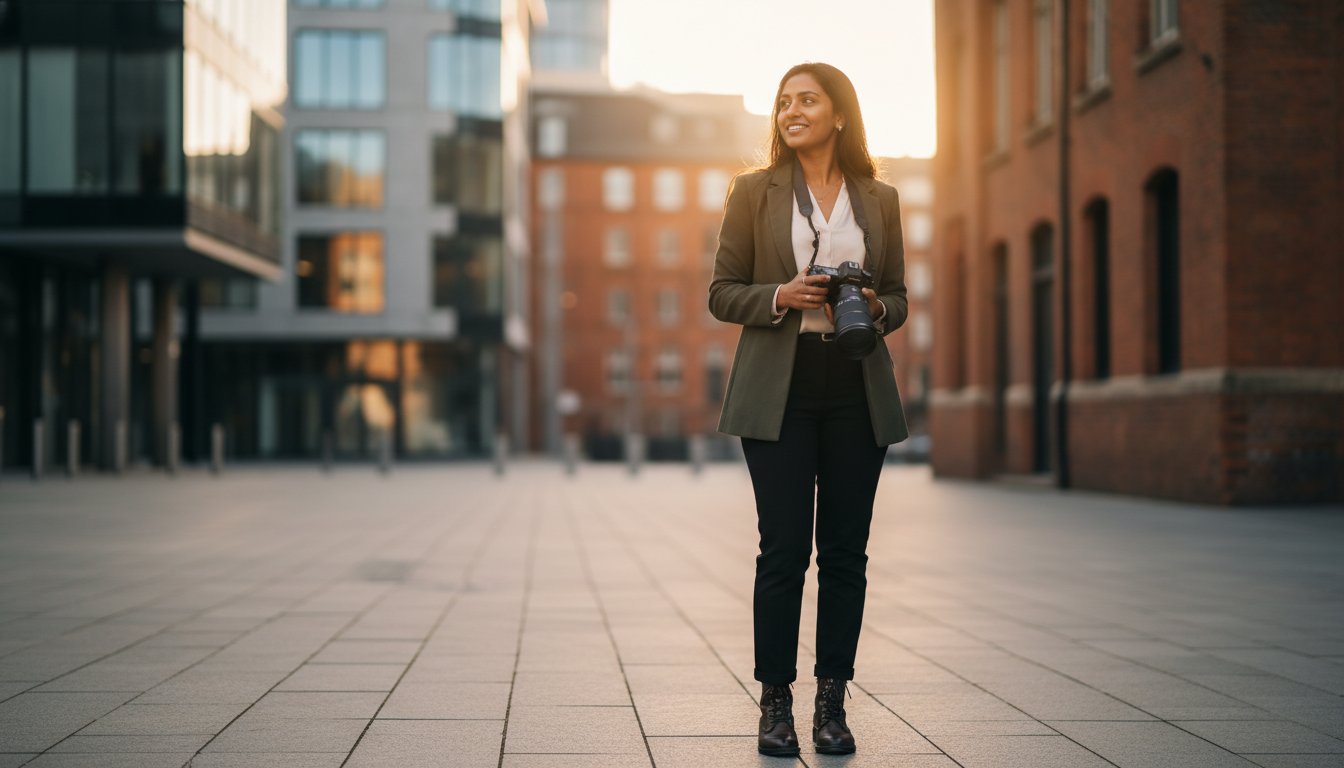
Confidence isn't something you're born with behind the lens. It's something you build, deliberately and systematically, through the kind of structured mastery that separates working professionals from talented hobbyists. If you've ever stood at the altar of a wedding venue, hands trembling slightly as the light shifts and the couple looks to you for direction, you already understand exactly what's at stake. That moment of doubt isn't a character flaw; it's a signal that your skills haven't yet caught up with your ambitions.
You're not alone in that feeling. According to a 2024 survey by the British Journal of Photography, over 67% of emerging photographers reported experiencing imposter syndrome within their first three years of charging professional fees. Knowing how to be a more confident photographer isn't about adopting a bolder personality or faking authority until it arrives. It's about reaching the point where your technical decisions become automatic, your client direction becomes instinctive, and your portfolio speaks with a clarity that removes all doubt.
In this guide, we'll walk through the precise habits, frameworks, and professional milestones that transform self-doubt into genuine authority, so that every shoot you lead reflects the standard your clients are paying for.
Key Takeaways
- Understanding how to be a more confident photographer begins with recognising that imposter syndrome is a skills gap, not a personality flaw, and that it can be addressed through deliberate, structured practice.
- Technical mastery, particularly the ability to operate in manual mode instinctively, forms the bedrock of creative confidence and allows you to focus on directing your subjects rather than wrestling with your settings.
- Effective subject direction is a learnable, technical skill in its own right, and photographers who communicate with clarity and positive reinforcement consistently produce stronger, more natural results.
- A curated portfolio, built through low-stakes practice environments, acts as tangible evidence of your capability and significantly reduces client doubt before a shoot even begins.
- Tutor-led feedback and formal accreditation through recognised photography courses and workshops accelerate professional growth in ways that self-teaching alone rarely achieves.
Understanding the 'Imposter Syndrome' in Professional Photography
At its core, impostor syndrome in photography is the persistent belief that your successes are accidental, that your clients will eventually discover you're not as capable as your portfolio suggests, and that the next shoot will be the one that exposes you. It's a psychological pattern that's remarkably common in creative professions precisely because there's no single, objective measure of success. A surgeon either completes the procedure correctly or doesn't. A photographer operates in a far more subjective arena, where "good enough" shifts with every client, every venue, and every lighting condition.
This is why the familiar advice to "fake it until you make it" is not just unhelpful for photographers; it's actively counterproductive. Faking technical authority in a craft that demands real-time problem-solving doesn't build confidence. It builds a fragile performance that collapses the moment conditions deviate from the expected. When the ceremony starts twenty minutes early, when the reception lighting is far worse than the venue's promotional photographs suggested, or when a key family member refuses to cooperate during formal portraits, performed confidence offers nothing. Genuine competence is the only reliable resource.
There's also a well-documented psychological phenomenon that makes this particularly challenging for photographers who are genuinely progressing. The Dunning-Kruger effect describes a cognitive bias in which people with limited knowledge tend to overestimate their ability, whilst those with deeper expertise become acutely aware of how much they still don't know. In practical terms, this means that the more seriously you study photography, the more your doubt may actually intensify before it resolves. That uncomfortable phase isn't regression; it's a sign of genuine growth.
The most meaningful shift in learning how to be a more confident photographer often comes from a change in perspective: moving from the mindset of taking a picture to that of creating a vision. The former is reactive and passive; the latter is intentional and authoritative. When you begin to approach a shoot with a considered creative framework rather than simply hoping the right moment appears, your entire relationship with the camera changes.
The Difference Between Amateur Hesitation and Professional Composure
Amateur hesitation almost always originates from a lack of structure. Without a pre-shoot checklist, a clear shot list, or a reliable understanding of how to read and adapt to changing light, every moment on location carries an undercurrent of anxiety. Professional composure isn't the absence of uncertainty; it's the presence of preparation. Professional confidence is the ability to solve problems in real-time without the client noticing. That capacity is built methodically, not adopted as a personality trait.
Why Comparing Your 'Behind-the-Scenes' to Others' 'Highlight Reels' Destroys Confidence
Social media presents a particularly corrosive trap for developing photographers. What appears in another photographer's feed represents their finest 1% of work, curated, edited, and presented without context. Measuring your unprocessed RAW files, your difficult clients, and your lighting failures against that polished output is a comparison that can never be fair or useful. The more productive standard is a recognised, structured benchmark, the kind that formal assessment and tutor-led critique provide, rather than the approval metrics of an algorithm. Critique, when it comes from a qualified source, isn't a verdict on your worth; it's the most direct route to the refinement that genuine confidence requires. Reframing feedback as professional intelligence, rather than personal judgement, is one of the most significant mindset shifts you can make on the path to becoming a more authoritative photographer.
Technical Mastery: The Foundation of Creative Confidence
There's a direct, measurable relationship between technical fluency and professional composure. When your hands know where every dial and button lives without conscious thought, your mind is freed to do what actually matters: read the room, direct your subjects, and craft images with intention. Understanding how to be a more confident photographer, at its most fundamental level, begins with reducing the cognitive load that gear uncertainty creates under pressure.
Manual mode is the clearest example of this principle in practice. A photographer who still deliberates over the exposure triangle whilst a bride walks down the aisle isn't just slow; they're visibly uncertain. Clients read that hesitation immediately, even if they can't name what they're observing. The goal isn't simply to understand aperture, shutter speed, and ISO in theory. The goal is to adjust them instinctively, the way an experienced driver changes gear without looking at the gearstick.
Building that level of fluency requires deliberate, repetitive practice in conditions that simulate pressure. A structured approach might look like this:
- Blind camera drills: Practice locating and adjusting every key setting with your eyes closed. Ten minutes per session, three times a week, produces measurable improvement within four to six weeks.
- Fail-safe mental checklist: Before every professional shoot, run through a fixed sequence: white balance confirmed, ISO set conservatively, shutter speed appropriate for movement, memory cards formatted and seated. This checklist doesn't need to be long; it needs to be automatic.
- Simulated high-pressure environments: Shoot in deliberately difficult conditions, low light, fast movement, unfamiliar venues, not to produce portfolio work, but to stress-test your instincts before a client's day depends on them.
The Psychology of Muscle Memory and Gear Familiarity
Fumbling with dials in front of a client communicates one thing above all else: that you're not fully in control. Muscle memory removes that signal entirely. When your camera becomes a natural extension of your vision rather than an obstacle between you and the image, the transition from technical worry to creative flow happens organically. That state, what psychologists refer to as cognitive offloading, is where your best work lives.
Lighting with Authority: From Natural Light to Studio Flash
Light is not a matter of luck. It's a predictable science, and photographers who treat it as such consistently outperform those who rely on favourable conditions. Mastering photography tips regarding light means understanding the quality, direction, and colour temperature of any source you encounter, and knowing precisely how to modify or supplement it. A reliable lighting kit, comprising at minimum a portable speedlight, a compact reflector, and a diffusion panel, means that a dark church, a windowless reception room, or an overcast outdoor setting never becomes a crisis. It becomes a problem you've already solved.
That preparedness is one of the most tangible confidence boosts available to any working photographer. Knowing you can save a difficult venue removes the low-level anxiety that compromises creative decision-making throughout an entire shoot. If you're ready to build that technical foundation within a structured, tutor-led environment, exploring the photography courses and workshops available through the Institute of Wedding Photographers is a logical and productive next step.
The Art of Direction: Leading Your Subjects with Authority
Technical fluency gets you to the shoot. What happens once you're there depends almost entirely on your ability to lead people. Communication, in the context of professional photography, isn't a soft skill that some photographers happen to possess naturally. It's a technical discipline, as learnable and as practised as exposure control, and it sits at the heart of how to be a more confident photographer in real-world conditions.
The photographers who consistently produce natural, emotionally resonant images aren't simply lucky with their subjects. They've developed a precise vocabulary of direction, a set of verbal and physical cues that guide people into authentic moments without making them feel managed or self-conscious. That vocabulary is built deliberately, refined over dozens of shoots, and it starts with understanding that your subjects are almost always more nervous than you are.
Positive reinforcement isn't about hollow praise. It's about maintaining the energetic momentum of a shoot. When a subject hears "that's exactly it, hold that" immediately after a genuine expression crosses their face, they're far more likely to reproduce it. Silence, on the other hand, creates anxiety. A subject standing in front of a lens with no auditory feedback will default to the most self-conscious version of themselves within seconds. Keep the dialogue moving, keep the energy warm, and the images will reflect it.
Developing a posing vocabulary that feels natural rather than choreographed is a matter of framing direction as movement rather than position. Instead of "put your hand here," try "walk slowly towards me and glance back." The distinction is significant: one creates a static arrangement, the other captures a living moment. Experienced photographers build a library of these prompts over time, categorised mentally by subject type, setting, and the emotional register the image requires.
Establishing Control from the First Consultation
Authority on the day of a shoot is established long before the camera comes out. A pre-shoot guide, sent to clients in advance, sets clear expectations around timing, location logistics, and what to wear. For wedding photographers managing groups of twenty or more, this document is essential. It removes the mid-shoot confusion that erodes both your time and your composure, and it signals to clients that they're working with someone who has done this before and has a plan.
Body Language and Vocal Cues for the Photographer
Your subjects mirror your energy with remarkable accuracy. A photographer who stands with rounded shoulders, speaks tentatively, or moves hesitantly around a location will produce subjects who look exactly that way in the frame. Stand with intention. Move with purpose. Use a calm, measured vocal tone that communicates certainty rather than suggestion. Practical phrases like "relax your jaw slightly and breathe out" or "think about the last time you genuinely laughed together" elicit real expressions because they redirect attention inward rather than focusing the subject on the camera. That redirection is one of the most powerful tools in a confident photographer's repertoire.
Learning to lead with this level of structured authority is a skill that develops considerably faster within a tutor-led environment, where feedback on your subject direction is as precise as feedback on your technical settings. Exploring the photography courses and workshops available through the Institute of Photographers offers a structured framework for developing exactly that kind of professional composure.
Building Professional Resilience and a Recognised Portfolio
A portfolio isn't simply a collection of your favourite images. It's the first conversation you have with every prospective client, and it happens before you've exchanged a single word. Understanding how to be a more confident photographer means recognising that a well-curated portfolio functions as a shield against client doubt, removing hesitation from the enquiry process and establishing your authority before any consultation begins. The work you choose to show defines the work you'll be hired to do, which makes curation one of the most strategically important decisions in your professional practice.
The most common mistake developing photographers make is showing too much. A gallery of forty images that spans three genres, four lighting styles, and inconsistent editing creates confusion rather than conviction. According to research published by the Nielsen Norman Group in 2023, prospective clients form a trust judgement about a creative professional's website within approximately 50 milliseconds of landing on it. That judgement is based on visual coherence, not volume. Ten images that share a consistent standard, a recognisable aesthetic, and a clear emotional register will outperform forty images that demonstrate range but lack identity.
Curation as a Tool for Professional Identity
The 'Distinction' mindset is a useful internal benchmark: if an image wouldn't pass a rigorous external assessment, it doesn't belong in your public-facing portfolio. Applying that standard consistently produces a gallery that communicates expertise with quiet authority. The Institute of Photographers' gallery is a strong reference point for understanding what that standard looks like in practice, particularly within wedding and portrait photography. When a prospective client encounters work that consistently meets that level, their confidence in booking transfers naturally.
Portfolio Builders, specifically structured low-stakes shoots designed to generate portfolio-quality work without the pressure of a paying client, are one of the most underused tools available to emerging photographers. The Institute of Photographers' Wedding Photography Portfolio Builder Workshop creates precisely this environment: real subjects, real locations, and real creative challenges, but without the irreversible consequences of a live event. That distinction matters enormously for skill development. You can take risks, experiment with direction, and learn from outcomes in a context where a failed frame is a lesson rather than a professional failure.
Handling Setbacks and High-Pressure Environments
Every working photographer has a shoot they'd rather forget. The ceremony that started without warning. The reception venue with lighting that bore no resemblance to the brochure. The family portrait session where a key subject simply refused to engage. What separates professionals from the rest isn't that these things don't happen to them; it's that they've built the problem-solving capacity to absorb the disruption without it showing in their demeanour or their images.
When things go wrong, a structured response matters more than an instinctive one. A practical framework looks like this:
- Pause and assess: Identify specifically what has changed and what resources you have available. Panic narrows creative thinking; a brief deliberate pause restores it.
- Adapt your shot list, not your standards: A difficult venue doesn't mean compromised images; it means a different approach to achieving the same quality outcome.
- Debrief honestly afterwards: The photographers who grow fastest are those who review difficult shoots with genuine rigour, noting not just what went wrong, but what decision led to it.
Building a peer network is equally important and frequently overlooked. A trusted group of photographers at a similar professional stage provides sanity checks, second opinions, and the reassurance that your challenges aren't unique to you. Seeking objective feedback from a qualified institute of photography accelerates this growth further, because tutor-led critique identifies the specific technical and creative gaps that peer feedback alone often misses.
Resilience, in this context, isn't emotional stoicism. It's the practical confidence that comes from knowing you've already solved the problem in training before you face it on a client's day. That preparation is precisely what structured, tutor-led programmes are designed to build. Explore the wedding photography training dates available through the Institute of Photographers to find the right programme for where you are in your professional development.
Elevating Your Practice through Mentorship and Accreditation
There's a ceiling that almost every self-taught photographer hits eventually. Progress feels steady for a while, then it stalls. The images improve incrementally, but the underlying confidence doesn't follow. That plateau isn't a talent problem; it's a feedback problem. Without a qualified external perspective, it's genuinely difficult to identify what's holding your work back, because the gaps in your knowledge are, by definition, the things you don't yet know to look for.
This is precisely where tutor-led mentorship changes the trajectory. A skilled mentor doesn't simply validate your strengths; they locate the specific technical and creative patterns that are limiting your growth and give you a structured path to address them. That precision is something no amount of YouTube tutorials or forum feedback can reliably replicate. Self-directed learning builds knowledge. Mentorship builds judgement, and it's judgement that underpins genuine confidence on a professional shoot.
Understanding how to be a more confident photographer at this level means accepting that structured accountability accelerates growth in ways that solitary practice cannot. The Institute of Photographers' Academy is built around exactly this principle, offering mentorship programmes designed to refine both your creative vision and your professional practice within a framework that produces measurable, verifiable outcomes.
Why Structured Mentorship Accelerates Confidence
Blind spots are the defining challenge of self-teaching. A mentor identifies them quickly and objectively, because they're observing your process rather than living inside it. Beyond individual feedback, finding a community of high-standard peers through recognised bodies such as the Institute of Wedding Photographers provides ongoing benchmarking against a genuine professional standard, rather than the curated highlight reels of social media. That distinction matters considerably for long-term development.
Investing in Your Professional Future
Formal accreditation carries a psychological weight that's easy to underestimate until you've experienced it. Earning a recognised distinction isn't simply a credential for your website; it's tangible, externally validated evidence that your work meets a defined professional standard. That shift, from believing you're capable to having that capability confirmed by a qualified body, is one of the most significant confidence transformations available to a developing photographer.
Immersive experiences, such as the four-day workshop at Ceconi Castle, compress months of incremental learning into a concentrated environment where experimentation is safe, feedback is immediate, and the creative stakes are genuinely high. That intensity produces the kind of growth that weekly self-directed practice rarely achieves.
The transition from a person with a camera to a recognised professional isn't a sudden event. It's the cumulative result of structured learning, qualified critique, and the confidence that comes from knowing your work has been assessed and found to meet a serious standard. Explore the photography courses and workshops available through the Institute of Photographers to find the programme that matches where you are and where you intend to be.
Your Next Step Towards Genuine Professional Authority
Knowing how to be a more confident photographer isn't a single revelation; it's the cumulative result of deliberate choices made consistently over time. Technical fluency, purposeful subject direction, and a curated portfolio that reflects a clear professional standard each play a distinct role in that transformation. None of them arrive through observation alone.
What accelerates the process is structured accountability: tutor-led feedback from industry experts who can identify the specific gaps that self-review misses, intensive portfolio-building workshops that replicate real professional pressure without the irreversible stakes, and recognised accreditation that converts your capability into a credential a prospective client can trust immediately.
The photographers who progress most decisively are those who invest in their development with the same seriousness they bring to their craft. That investment doesn't have to be gradual or solitary. Refine your vision and build professional confidence at our Photography Academy and take the next step with a programme designed to produce measurable, verifiable results.
Your best work isn't behind you. It's waiting for the right foundation.
Frequently Asked Questions
How do I gain confidence as a beginner photographer?
Start by mastering one thing at a time rather than trying to absorb everything simultaneously. Spend two weeks shooting exclusively in manual mode, then two weeks focused solely on light reading, then two weeks on subject direction. This sequential approach builds genuine competence in layers, and competence is the only reliable source of confidence. Structured, tutor-led programmes accelerate this process considerably because feedback is precise rather than generalised.
Low-stakes practice environments are equally important. Volunteer to photograph local events, community gatherings, or friends' occasions where the pressure is minimal but the conditions are real. Each session adds to a mental library of solved problems, and it's that library you'll draw from when a professional shoot doesn't go to plan.
Is it normal to feel nervous before a professional photoshoot?
Entirely normal, and arguably a healthy sign. A 2024 survey by the British Journal of Photography found that 67% of emerging photographers reported imposter syndrome within their first three years of professional work, which means pre-shoot nerves are the industry standard rather than the exception. The distinction that matters is whether that nervousness sharpens your preparation or compromises your performance.
Experienced photographers channel pre-shoot anxiety into a final systems check: gear confirmed, shot list reviewed, client brief revisited. That ritual converts nervous energy into productive focus. If nerves are consistently derailing your work rather than sharpening it, that's a signal to invest in more structured practice before the next booking.
How can I stop comparing my work to other photographers on social media?
Replace the comparison entirely by anchoring your progress to a fixed, objective standard rather than a moving social feed. A recognised professional benchmark, such as the assessment criteria used by a formal photography institute, gives you a consistent measure that doesn't shift with an algorithm. Your reference point becomes your own previous work assessed against that standard, not another photographer's curated highlight reel.
It also helps to understand the mathematics of what you're looking at. A photographer with 20,000 Instagram followers might post three images per week from a catalogue of several hundred. What's visible is the top fraction of a percent of their output. Measuring your unedited process against that is a comparison that was never designed to be fair.
How do I handle a difficult or demanding client with confidence?
The most effective tool is a pre-shoot agreement that clearly defines deliverables, timelines, and creative scope before any work begins. Difficult client interactions almost always originate from misaligned expectations rather than genuine dissatisfaction with the photography itself. A written brief, confirmed in advance, removes the ambiguity that demanding clients exploit. When a boundary is challenged on the day, you have a documented reference point to return to calmly.
On location, keep your communication warm but directional. Phrases like "I'd like to try this next" rather than "is it okay if we..." signal authority without creating conflict. Clients respond to calm certainty; hesitant phrasing invites negotiation. Practising this vocal tone in lower-pressure shoots builds the habit before it's needed in a high-stakes environment.
What is the fastest way to improve my photography skills and self-assurance?
Immersive, tutor-led training compresses growth in a way that months of solo practice rarely achieves. A concentrated four-day workshop, such as the programme offered at Ceconi Castle through the Institute of Photographers, places you in a high-creative-stakes environment with immediate expert feedback on both your technical decisions and your subject direction. That intensity produces measurable skill shifts because errors are identified and corrected in real time rather than reinforced through repetition.
The secondary accelerator is honest, qualified critique. Knowing how to be a more confident photographer ultimately requires someone outside your own perspective to identify the specific patterns holding your work back. Self-review has a ceiling; tutor-led assessment does not.
Does owning expensive camera gear actually make you more confident?
Briefly, and then not at all. A professional body and a fast prime lens do remove certain technical limitations, particularly in low light, and that removal of friction can feel like confidence. But gear confidence is situational; it evaporates the moment you encounter a condition your equipment doesn't solve automatically. Skill-based confidence, built through deliberate practice and structured feedback, is durable across every environment you'll encounter.
The photographers who consistently produce strong work in difficult conditions are those who understand their gear deeply rather than those who own the most of it. A photographer who knows a mid-range camera body instinctively will outperform one who's still learning an expensive system under pressure. Familiarity and fluency matter far more than specification.
How can I lead a group of people during a wedding shoot without feeling awkward?
Preparation removes the awkwardness before it has a chance to appear. A pre-shoot guide sent to the couple in advance, listing the specific group combinations you'll photograph and the approximate time each will take, means guests arrive knowing what to expect. When you call a group together and they already understand the process, your role shifts from organiser to director, which is a considerably more confident position to occupy.
On the day, use a clear, projected voice and name specific people rather than gesturing vaguely. "David, could you step in on the left, and Sarah, just behind him" is more efficient and more authoritative than "can everyone shuffle a bit closer." The 2-Day Complete Wedding Photography Workshop at the Institute of Photographers includes practical group direction exercises that build exactly this kind of structured confidence in a safe learning environment.
Why do I feel like a 'fraud' even though I produce good photos?
This is the Dunning-Kruger effect working precisely as expected, just in reverse. As your expertise deepens, your awareness of the craft's complexity grows faster than your sense of mastery. Photographers who feel like frauds despite producing strong work are almost always those who understand enough to recognise how much further excellence can go. That discomfort is a marker of genuine progression, not evidence of inadequacy.
The most reliable antidote is external validation from a qualified source. Formal accreditation through a recognised photography institute converts subjective self-assessment into an objective, verified standard. When your work has been assessed and confirmed to meet a defined professional benchmark, the internal narrative of fraudulence loses its grip because it no longer has any factual basis to stand on.