
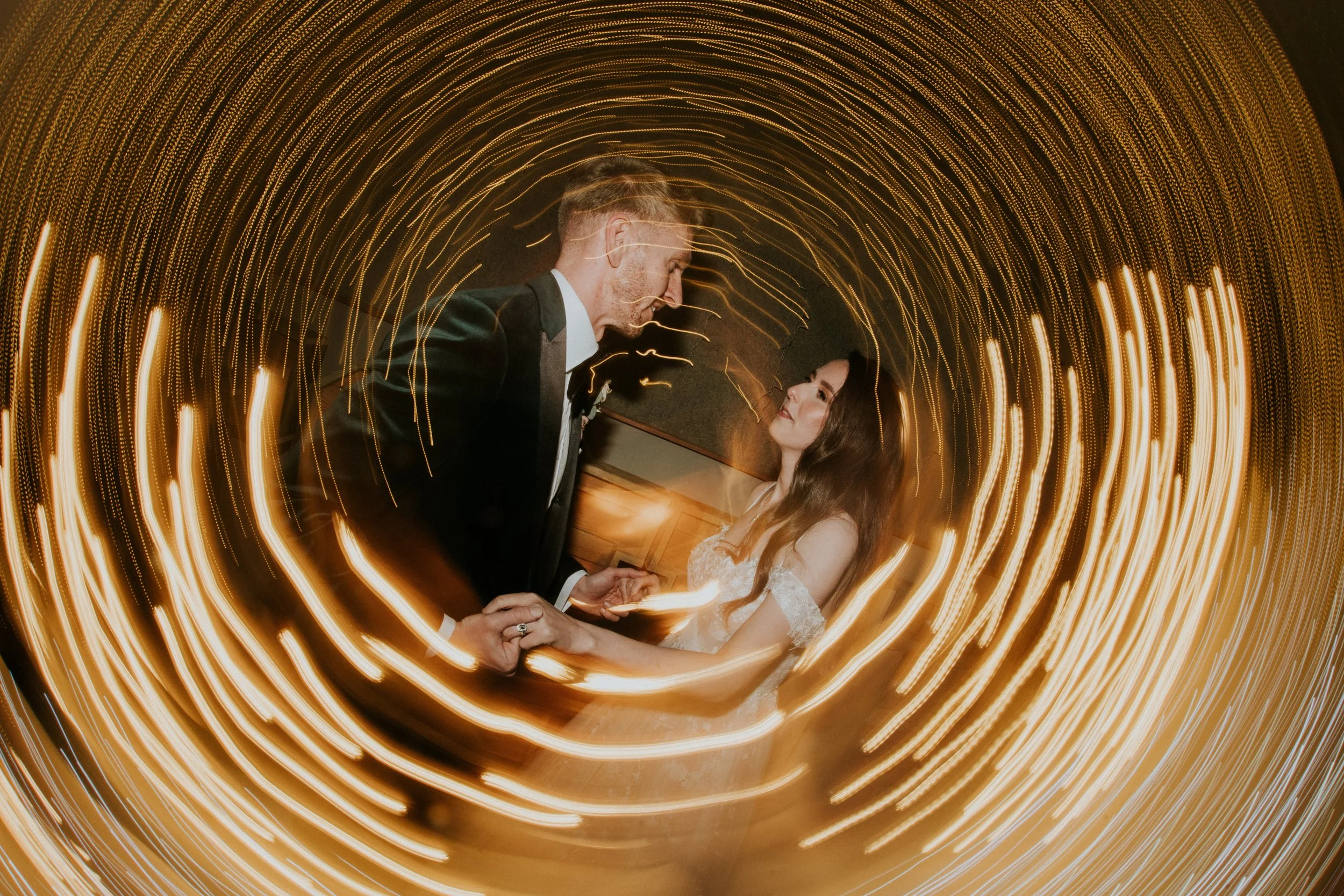
The most memorable wedding photographs aren’t always the ones where everyone looks at the camera. To understand what makes a good wedding photo, look beyond technical sharpness to the feeling and story within the frame.
Carefully composed portraits preserve the couple, family and wedding party with intention. A meaningful collection also captures the setting, defining ceremony moments and unguarded exchanges between guests. Each image contributes something different.
This guide explores how portraits, venue details, guests, ceremony moments and candid documentary photography work together to tell a fuller story of the day. You’ll see why attentive timing, thoughtful composition and an observant approach matter, whether a photograph is planned or unfolds naturally.
The strongest wedding collections balance direction with room for spontaneity. When these elements complement one another, photographers can capture celebrations more thoughtfully, and couples can recognise the images that will remain meaningful long after the day.
Key Takeaways
Plan portraits that feel varied and natural, with time for gentle direction and a relaxed start.
Look beyond the couple to the venue details that give each celebration its own visual character.
Make space for photographs of guests connecting, so the collection reflects the people and atmosphere of the day.
Stay attentive to fleeting ceremony moments, from the exchange of rings to the newlyweds’ walk back down the aisle.
Use documentary techniques to capture genuine interactions and build a stronger, more personal wedding portfolio through structured training.
Table of Contents
5. Candid documentary and photojournalistic wedding photography
Institute of Wedding Photographers: business and marketing support in the UK
1. Creating varied couple portraits at different locations
Strong couple portraits show more than a polished pose. They capture how the couple feels together and place them within the character of their wedding day. A photographer can create variety by choosing a few locations, such as a quiet garden, a grand staircase and a path beside the reception venue. Each offers a different background, quality of light and sense of intimacy.
Time and rapport shape the portraits as much as location. A relaxed wander at the start gives the couple a chance to settle before more directed images. Around forty-five minutes after the ceremony, during the drinks reception, can provide space for portraits without turning the session into a series of rushed poses. Gentle prompts, such as asking the couple to walk together or pause to talk, give them something natural to do. I introduce myself clearly and explain each direction, so the couple and wedding party know what to expect.
Family and group portraits work best with a clear sequence. Start with the couple and their parents, then add siblings, the wedding party, extended family and friends. Building larger combinations from smaller groups avoids repeatedly gathering the same people. A list of requested groupings helps organise relatives, while a nominated family member can identify guests. For example, photograph the couple with both sets of parents before adding siblings.
A first look can add a distinct emotional moment to the portrait collection. If the couple plans to see each other before the ceremony, choose an uncluttered background and let them turn towards one another without interruption. Rather than directing every expression, be ready for a first glance, a laugh or a quiet embrace. These photographs feel personal because the couple is responding to each other, not performing for the camera.
What should couples look for in a wedding photographer’s portfolio? Review complete examples of couple, family and wedding-party portraits, not just a handful of standout images. Check whether expressions look comfortable, group compositions are clear and locations add context without distracting from the people.
To practise this range, follow a simple sequence: choose a location, observe the light, give one clear prompt, then let the couple respond. Review the images for variety in framing, distance and emotion. A close portrait may capture a quiet exchange, while a wider frame shows the venue and the couple within it. This balance helps the photographs feel personal rather than like repeated versions of one pose.
2. Venue and wedding detail photographs
Venue photographs establish where the wedding took place and preserve details the couple chose. Start with a wide view of the ceremony room, then capture closer images of the table plan, flowers, place settings and cake. These frames add context between portraits and guest moments. A photograph of handwritten name cards beside the table arrangement, for example, can show the care behind the reception design.
Landscape and exterior photographs connect the venue with its surroundings. At a country house, include the building and gardens; in a city, use a recognisable street or architectural detail. A high viewpoint can show the layout of the grounds, while a path with the couple walking through it adds scale. Where possible, keep distractions such as parked cars out of the frame. Couples can ask the venue to restrict parking in selected areas before photographs begin.
Light changes with the venue, weather and time of day, so adapt camera settings to the conditions. Large windows can provide soft natural light for a ceremony or getting-ready photographs. If the ceremony room has a window at one end, placing the couple near it can create a clear focal point. Watch how light falls across faces and important details, then choose a position that avoids harsh shadows or a bright background.
Dim venues call for a careful balance between exposure and image quality. Raising ISO can help record detail in a dark reception room, although higher settings may make images grainier. Use available window or room light when it gives the scene shape, and consider flash after sunset when ambient light no longer supports the photograph. A candlelit table, for example, may need careful exposure to preserve the setting and visible detail.
When a wedding uses separate venues, plan photographs around the journey. Allow for the route, travel conditions and time to move equipment instead of treating the transfer as an empty gap. A ceremony at a town hall followed by a reception at a nearby hotel may offer an opportunity for a brief street scene between locations. Agree on the sequence in advance so the couple isn’t hurried away from guests or left with too little time at either venue.
Before the day, build a short venue shot list: exterior, ceremony space, reception setup, meaningful details and a landscape view. On arrival, walk through each room and identify window light, cluttered backgrounds and useful viewpoints. Remember that a beautiful room can photograph differently from each angle. A wedding photography gallery can help photographers study how setting, framing and light work together across a complete collection.
3. Capturing time with wedding guests
Guest photographs show the relationships surrounding the couple. At the reception, look for friends greeting relatives, grandparents sharing a conversation or children playing near their table. These exchanges give the collection social context instead of making every frame a formal record of who attended. Move quietly through the room and anticipate moments without interrupting them.
A useful approach is to observe a group before raising the camera. Notice who is speaking, who is listening and where a genuine reaction might happen. A guest laughing during a speech, for example, can make a more revealing image than a row of people looking at the lens. Shift position as the interaction changes, keeping faces visible and distracting backgrounds out of the frame where possible.
Make time for guests during the reception, not just during scheduled photographs. Speeches, the first dance and cake cutting each offer different opportunities to capture reactions. During a speech, the speaker’s expression matters, but so may a parent listening or friends exchanging a glance. At the first dance, include the couple and nearby guests watching to convey the wider atmosphere.
Key ceremony moments require attention before, during and immediately after the vows. A considered sequence includes the exchange of rings, the couple’s first kiss and their walk back down the aisle as newlyweds. At a church ceremony, anticipate where the couple will stand and how they’ll leave, then choose a position with a clear view. The moment after the exit lasts only briefly, so be ready before the doors open.
Emotion often appears between formal events. A parent wiping away a tear, a friend offering a reassuring hand or a guest reacting to a surprise can reveal the character of the day. Keep the camera ready during transitions, such as the move from the ceremony to the drinks reception. These moments pass quickly, so watch faces across the room for reactions that might otherwise go unnoticed.
Respectful observation matters. Avoid placing the camera between guests having a conversation, and don’t repeatedly ask people to recreate a spontaneous reaction. If a favourite relative is there, capture their connection with the couple as well as their response during the speeches. A balanced sequence might include a wide reception view, a small group in conversation and an expressive close-up. Together, these perspectives make guests part of the story rather than background decoration.
4. Ceremony moments, including the aisle and first kiss
Wedding ceremonies move through brief, meaningful moments, so preparation matters. The vows, exchange of rings, first kiss and newlyweds’ walk back down the aisle each deserve attention. Choosing a position before the ceremony begins helps the photographer capture these moments without rushing between viewpoints. After the couple leave, stay alert: their first moments together as newlyweds can bring laughter, embraces and visible relief.
Start by discussing the ceremony sequence and the photographs that matter most to the couple. Couples can share a personalised photo list, including the first kiss, a particular family member’s reaction or a meaningful detail in the service. Give the list to the photographer in advance. It clarifies priorities while leaving room to capture unscripted moments. Include family names or relationships when they help identify important guests.
Before guests take their seats, consider the aisle’s direction, available space and lighting. At a church, for example, the photographer may need a position that shows both the person walking down the aisle and the couple’s response. Anticipate where the couple will stand for the first kiss and keep the camera ready. Don’t rush the moment; a brief pause can preserve the kiss and the expressions immediately afterwards.
Photography rules can vary between ceremony venues and services. Some restrict where a photographer may stand or whether flash can be used. Couples should share the venue’s photography instructions with the photographer in advance. This gives the photographer time to plan positions, camera settings and alternative angles rather than discovering a restriction during the vows. Venue guidance can determine which viewpoints are possible.
For a civil marriage ceremony, clarify the planned sequence and photography arrangements with the venue beforehand. The person conducting the ceremony may have instructions about movement, equipment or guest seating. Sharing those details with the photographer helps them plan discreet positions and avoid disrupting the proceedings. Both the ceremony format and venue guidance affect how photographs can be taken.
How can couples prepare for good wedding photos? Share a concise list of essential ceremony moments, explain relevant family or cultural details, and pass on photography restrictions in advance. Name the vows, rings, first kiss and aisle exit, then identify any guests whose reactions matter. With this information, the photographer can prepare for changing light and focus on moments as they happen, from a parent’s tears to laughter among the guests.
5. Candid documentary and photojournalistic wedding photography
Documentary wedding photography records real interactions as they happen, without asking people to pose or repeat their actions. At a reception, that might mean capturing a guest laughing during a speech, then turning to the couple’s reaction. The photographer observes rather than directs, allowing the images to show how the day unfolded.
Photojournalistic coverage also relies on anticipation. During a wedding breakfast, watch how people respond to a speech, where family members are seated and when attention shifts. A meaningful frame might show the speaker in the foreground and a parent listening behind them. The composition captures both the event and its emotional effect.
What wedding photography styles are popular in the UK? Couples may choose traditional portraits, documentary storytelling, editorial composition or fine-art imagery, and photographers can combine these approaches. Documentary work focuses on unposed moments, while editorial images use considered framing and styling.
For candid photographs, build rapport before the wedding day and listen to what matters to the couple. A conversation about family relationships, personal traditions or a favourite shared activity can reveal which moments deserve extra attention. If the couple’s dog is joining the celebration, for example, be ready to capture its interactions with guests instead of arranging a predictable pose.
Observation is active, not passive. Read the room, anticipate movement and choose a position that keeps faces clear. Outside, a photographer might frame guests greeting one another beneath the venue entrance, using the doorway as a natural border. In a crowded reception, moving to the edge of the room can create cleaner backgrounds while keeping the photographer close to the action.
Light and changing settings shape documentary photographs too. A photographer may need to move from a bright garden into a dim reception room, adjusting exposure without missing the moment. The aim is to make the best photograph possible in the available light, not to stop a conversation while waiting for perfect conditions. A silhouette on the dance floor, for instance, can preserve the atmosphere when faces are less clearly lit.
Relaxed couples often appear more natural than tense ones, so a photographer’s manner matters. Be present and approachable, but avoid making the day revolve around the camera. In practice, this means giving guests room to connect, staying alert during transitions and responding calmly when plans change. To strengthen your documentary technique, explore wedding photography courses and workshops that develop observation, timing and composition.
Institute of Wedding Photographers: business and marketing support in the UK
Institute of Wedding Photographers offers business and marketing support for wedding photographers and videographers. Its packages are open to everyone, with learning to help you develop your approach to portraits, venue details and candid storytelling. Structured support can help you refine composition, respond to changing light and build confidence across different parts of a wedding day.
If you’re ready to develop practical skills, the 4 Day Photography Workshop at Ceconi Castle offers an intensive learning experience. The Wedding Photography Portfolio Builder Workshop can help you shape a stronger portfolio, while the Wedding Photography Mentorship Program supports continued development through guidance.
Choose a next step that matches your experience and the skills you want to strengthen. Contact the Institute of Wedding Photographers to discuss its business and marketing support.
Develop your next stage of photographic practice
Understanding what makes a good wedding photo gives you a foundation for developing a distinctive, reliable approach. Turn that understanding into practice by choosing one aspect of your craft to refine and assessing how your decisions shape the final images. You might focus on anticipating unscripted moments, composing with intention or adapting confidently to changing light.
After each assignment, review the photographs as a sequence rather than judging them only as individual frames. Ask whether the images communicate the atmosphere, relationships and story of the day. This reflection can reveal patterns in your work and clarify which skills need more attention. With considered practice, you can build a more consistent portfolio and develop a stronger creative point of view.
For business and marketing support in wedding photography and videography, explore packages designed to suit your goals and experience. Sign up with the Institute of Wedding Photographers to start learning. Everyone is welcome, and with curiosity, patient practice and constructive guidance, you can continue shaping a thoughtful and professional approach.
Frequently Asked Questions
What makes a wedding photo look good?
A clear subject, meaningful expression and visual context help an image feel complete. What makes a good wedding photo memorable is how these elements work together, not technical polish alone. A parent’s joyful expression, for example, can carry more meaning when the couple is recognisable nearby. Consistent colour and careful editing also help individual images feel connected in the finished collection.
What camera settings and lighting are best for wedding photography?
The best settings depend on the available light, subject movement and the effect the photographer wants. For a fast-moving moment, a quicker shutter speed can reduce motion blur; for a still detail, the photographer can prioritise depth of field. Take a test frame when entering a new room, then check exposure and focus. As conditions change, adjust settings deliberately instead of relying on one setup all day.
How do wedding photographers capture natural candid moments?
Natural candid images come from observing interactions and being ready before they peak. Look for cues such as a guest leaning towards a speaker or a child reaching for a relative’s hand. Frame these gestures with enough context to show where the moment is happening. After taking a photograph, stay alert: a smile or embrace that follows may add another layer to the story.
What poses and compositions work best for wedding portraits?
Effective portraits give people a comfortable position and a clear relationship within the frame. For a couple, standing close with shoulders angled slightly towards each other can feel connected without looking stiff. Hands can rest in pockets, sit behind the back or hold a bouquet. For a group, arrange faces at different heights and check that no one is hidden before taking the photograph.
How can bad weather, low light or tight schedules affect wedding photos?
Rain, fading daylight and schedule changes can limit planned locations or setups, so flexibility matters. If an outdoor portrait becomes impractical, a covered entrance or bright indoor area can provide an alternative backdrop. When time is short, prioritise photographs that depend on specific people or moments, then use any remaining opportunities for extra details. A realistic schedule also helps ensure transitions don’t cut into important parts of the day.