
Posing Large Wedding Groups: The Professional’s Guide to Architectural Composition in 2026
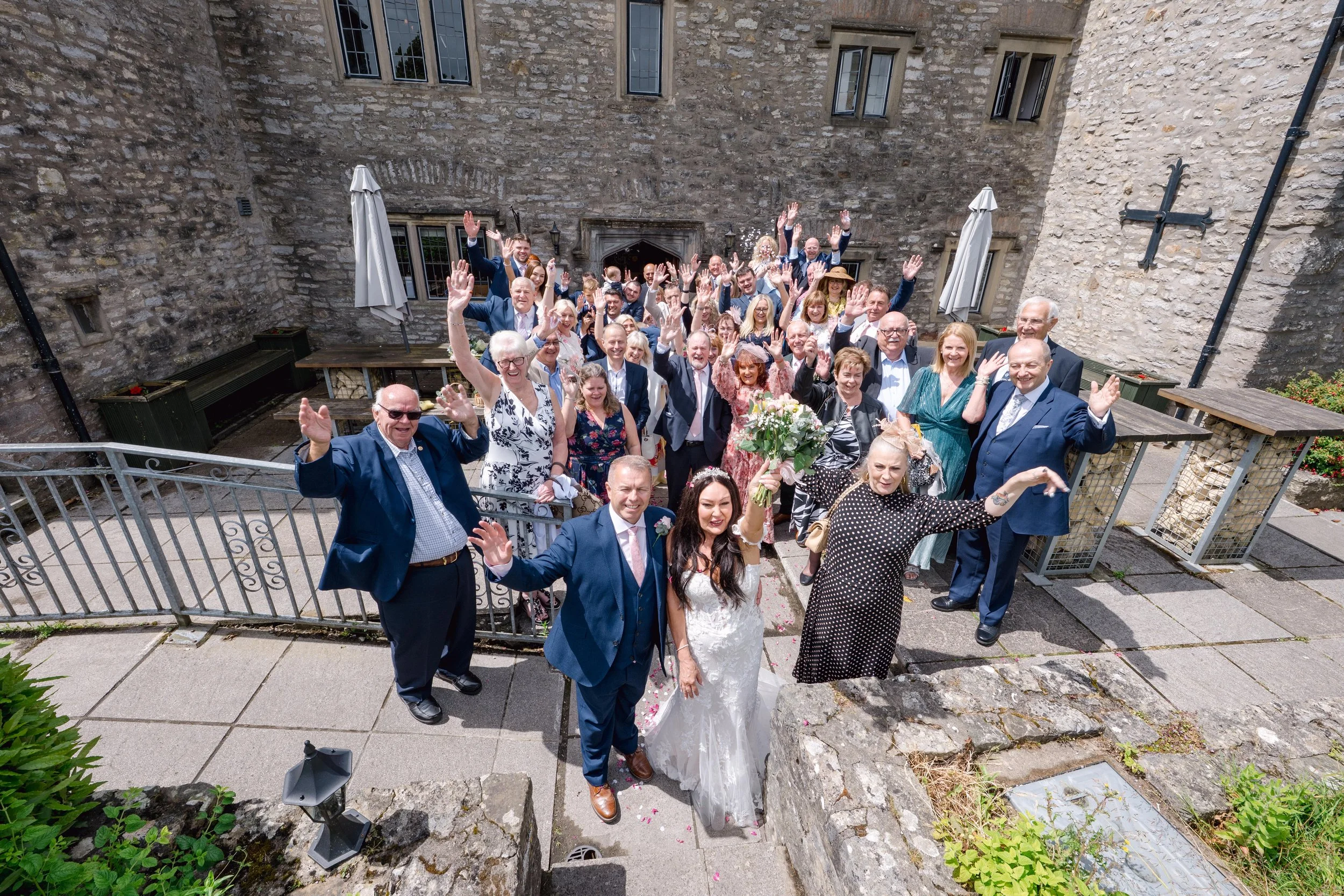
What if the most demanding fifteen minutes of a wedding day became the precise moment you demonstrated your absolute mastery of the craft? For many professionals, the task of posing large wedding groups feels less like an artistic endeavour and more like a battle against chaos, where blinking guests and soft focus on the rear rows threaten the integrity of the final gallery. It's an understandable anxiety to feel the crowd's attention slipping away while you struggle to organise a composition that feels both balanced and intentional.
We believe that maintaining authority while ensuring every individual looks their best requires a sophisticated blend of interpersonal leadership and technical precision. This guide provides a repeatable system for tiering large groups, allowing you to transform a disorganised crowd into a structured, gallery-worthy portrait with ease. You'll learn the architectural principles of group composition, the settings required for edge-to-edge sharpness, and the psychological cues needed to direct even the most boisterous wedding parties. By following these structured methods, you'll ensure your work remains a benchmark of professional excellence and a testament to your growth as a photographer.
Key Takeaways
Learn to transition from individual posing to mass management by identifying the specific thresholds where composition becomes a structured architectural exercise.
Master the "Triangle Method" and tiering techniques for posing large wedding groups, ensuring every guest is visible within a balanced and geometric arrangement.
Gain technical clarity on lens selection and focal plane physics to maintain consistent, sharp focus across multiple rows of people.
Refine your professional leadership skills by adopting a "Director’s Voice" and using strategic delegation to maintain control over energetic wedding crowds.
Elevate your professional standing by incorporating movement into group shots, transforming standard lineups into cinematic, high-value assets for your portfolio.
Table of Contents
The Challenge of Scale: Why Large Group Portraits Require a Strategic Approach
The Architecture of the Pose: Tiers, Triangles, and Visual Balance
Technical Precision: Focal Planes and Lighting for Massive Groups
The Art of Crowd Control: Directing with Confidence and Clarity
Elevating Your Craft: Advanced Group Posing in Professional Practice
The Challenge of Scale: Why Large Group Portraits Require a Strategic Approach
The transition from capturing an intimate bridal party to managing a guest list of over fifty people is the moment a photographer shifts from observer to architect. While smaller arrangements allow for individual refinement, posing large wedding groups requires a fundamental change in mindset; you are no longer posing people, but managing mass and volume. This shift usually occurs when a group exceeds twelve individuals, at which point the nuances of limb placement are superseded by the broader principles of photographic composition such as balance, symmetry, and depth.
Relying on a documentary approach during this phase is a common pitfall that often results in a loss of crowd control and a decline in image quality. While AI-powered culling tools can save time in post-production, they cannot fix the fundamental lack of engagement or the poor composition that arises from a disorganised shoot. When a professional "wings it," the resulting delay doesn't just frustrate the couple; it erodes the guests' confidence in your expertise. A well-executed group portrait serves as a visual testament to your leadership. It demonstrates that you can command a room with quiet authority, a skill that frequently leads to referrals from impressed family members who witness your efficiency first-hand.
The Purpose of the Formal Group Portrait
Despite the modern preference for candid storytelling, the formal group portrait remains a vital "record of state" for multi-generational families. These images are often the only ones destined for a physical mantelpiece, representing a legacy that transcends contemporary trends. Your role is to honour this tradition by creating a sense of occasion through structured arrangement. By validating the family’s need for a formal record while maintaining your creative standards, you provide a service that is both artistically sound and emotionally significant.
Setting Expectations During the Planning Phase
Success on the wedding day is almost entirely dependent on the preparation conducted weeks prior. We recommend allocating a "Golden Ratio" of three to five minutes for each large group to ensure you don't compromise on technical precision. During your pre-wedding site visit, identify a location that offers the necessary depth and elevation for the "Big Shot." Distinguishing between "VIP" family groups and "General" guest groups allows you to prioritising your energy where it matters most. For those looking to refine these logistical skills, our wedding photography courses offer deeper insights into posing large wedding groups while managing high-pressure environments with composure.
The Architecture of the Pose: Tiers, Triangles, and Visual Balance
Mastering the art of posing large wedding groups requires a shift from simple arrangement to architectural construction. When faced with fifty guests, the goal is to break the mass into interconnected geometric shapes using the "Triangle Method." By grouping individuals into smaller triangular clusters of three or five, you create a sense of visual rhythm that prevents the image from appearing like a flat, uninspired lineup. This technique ensures that the eye travels naturally across the frame rather than getting lost in a sea of faces. It is a method that transforms a crowd into a deliberate composition, providing a level of prestige that distinguishes professional work from amateur snapshots.
To maintain a cohesive unit, you must meticulously manage "dead space" between guests. Large gaps suggest a lack of connection, while overcrowding leads to a messy aesthetic. A fundamental principle in this discipline is the overlap rule, which dictates that no guest’s shoulder should ever obscure another’s face. When managing large wedding groups, implementing a "V" formation is particularly effective. By angling the outer edges of the group slightly inward, you create leading lines that naturally draw the viewer’s eye back to the couple at the centre. This structural choice ensures the newlyweds remain the undisputed focal point of the image.
Creating Depth Without Chaos
Achieving depth requires a strategic use of the environment. While many beginners fall into the trap of the "tallest in the middle" myth, a more sophisticated approach involves staggering head heights to create a varied, dynamic skyline. Utilising stairs, natural slopes, or professional posing stools allows you to build vertical tiers. For medium-large groups, a "sitting-kneeling-standing" hierarchy provides three distinct levels of depth. This arrangement ensures that everyone is visible and the couple remains prominent without being overwhelmed by the surrounding mass of guests.
Advanced Posing for Individuals within the Mass
The success of the collective depends on the posture of every individual. Direct guests to adopt a "core" posture, standing at a 45-degree angle to the camera to create a more flattering, streamlined silhouette. To eliminate the awkward "penguin" look, instruct bridesmaids and groomsmen to keep a slight gap between their arms and torsos. Finally, ensure all chin heights and eye lines are directed toward a single focal point; your lens. For those seeking to master these nuances under expert guidance, our Wedding Photography Mentorship Program offers personalised feedback to refine your directorial technique and professional standing.
Technical Precision: Focal Planes and Lighting for Massive Groups
While the arrangement provides the aesthetic foundation, technical execution ensures the file is actually usable. When posing large wedding groups, lens selection is your first critical decision. A 35mm prime or zoom is often superior to a 24mm lens, as the wider focal length can introduce unflattering edge distortion, stretching the guests at the periphery of the frame. By choosing a slightly longer focal length and stepping back, you maintain natural proportions across the entire composition. This approach requires more physical space, but the results are far more flattering for every individual involved.
The physics of the focal plane become increasingly complex as groups grow deeper. If you have four or more rows of guests, a wide aperture like f/2.8 is your enemy. It creates a sliver of focus that will inevitably leave the back rows soft and unusable. You must also account for micro-movements within the crowd. A shutter speed of at least 1/200, or preferably 1/250, is necessary to ensure that a guest shifting their weight or a child fidgeting doesn't result in motion blur. These technical choices are the difference between a snapshot and a professional document.
Mastering the Depth of Field
To achieve edge-to-edge sharpness, adopt the "f/8 Rule" as your baseline. This aperture provides enough depth of field to cover multiple rows without sacrificing too much ambient light. Rather than focusing on the front row, "ping" your focus point approximately one-third of the way into the group. This technique utilises the physics of depth of field, which extends further behind the focus point than in front of it. Always perform a "zoom-check" on your camera's LCD at 100% to verify that the people in the very last row are as crisp as the couple in the front.
Managing Natural and Artificial Light
Positioning is your primary tool for light management. To prevent guests from squinting, avoid direct sunlight; instead, position the group so the sun is behind them or diffused by a building. In deep rows, shadows often pool in the eyes of those in the back. Using a large off-camera modifier, such as an octabox or a 1.5-metre umbrella, can unify the light across a 10-metre spread. This is particularly useful in dark UK manor houses where mixed lighting from tungsten bulbs and window light can create muddy skin tones. For those wanting to master these technical hurdles, our wedding photography training course in the UK provides hands-on experience with advanced lighting setups for large-scale compositions.
The Art of Crowd Control: Directing with Confidence and Clarity
While the technical settings discussed previously ensure a sharp file, the success of posing large wedding groups depends heavily on your ability to command the environment. The "Director’s Voice" is not about volume. It is about composure. By projecting a calm, steady authority, you reassure the guests that the process will be efficient, which naturally encourages their cooperation. Guests are often eager to return to the reception; showing them that you have a structured plan is the fastest way to earn their respect and focus. If you appear flustered, the crowd will sense the lack of leadership and begin to self-direct, leading to the very chaos you wish to avoid.
An effective "Usher Strategy" involves delegating the logistics of gathering guests to a designated individual, such as the Best Man or a vocal relative who knows the family well. This allows you to remain at the camera, maintaining your focus on the composition and lighting while your assistant rounds up the next group. Simultaneously, you must manage the "Paparazzi" guests. Politely but firmly clear the line of sight from iPhones and guest cameras. If guests are looking at multiple lenses, you will struggle to capture a single frame where everyone is making eye contact with your camera. A simple request for "eyes on me first" usually suffices to secure the shot.
Verbal Cues and Micro-Adjustments
Precision in your language is vital for maintaining momentum. Avoid vague instructions like "someone move over," which often results in five people moving at once. Instead, use specific identifiers: "Gentleman in the blue tie, please take one half-step to your left." Combine these directives with positive reinforcement. Telling a group they look fantastic keeps the energy high and prevents the "statue" look that often plagues formal portraits. A well-timed piece of humour can break the tension, ensuring that smiles appear genuine rather than forced or weary.
The "One More" Fallacy
Never rely on a single frame. The "Eyes Open" Countdown is a repeatable system where you ask everyone to close their eyes and open them on the count of three. Even with this method, you should always take at least three identical frames of every large group. This provides a safety net for the "Swap" technique in post-production, allowing you to seamlessly replace a blinking face with a clear one from a secondary frame. Knowing when to "cut" the session is equally important; if you have captured the necessary frames, move on immediately to maintain the wedding’s momentum. If you wish to master the psychology of crowd management in a practical setting, our 2 Day Complete Wedding Photography Workshop offers the ideal environment to practice these directorial skills.
Elevating Your Craft: Advanced Group Posing in Professional Practice
Mastering the structural foundations of a group portrait is merely the first stage of professional growth. To truly distinguish your portfolio in a competitive 2026 market, you must transition from functional arrangement to editorial artistry. High-end clients increasingly seek images that feel like curated moments rather than static obligations. Successfully posing large wedding groups with a sense of movement and style demonstrates a level of creative maturity that justifies premium pricing. It signals to prospective couples that you possess the technical confidence to handle complexity without sacrificing the aesthetic elegance of their day.
Integrating movement is one of the most effective ways to elevate a standard shot. The "Walking Group" technique, where the wedding party moves slowly toward the camera, creates a dynamic sense of life and celebration. This requires precise timing and a high shutter speed to ensure every face remains sharp amidst the motion. Unlike candid snapshots, this is a directed exercise where you maintain control over the spacing and pace. It provides a contemporary alternative to traditional lineups while preserving the formal standards expected of a professional gallery. This balance between energy and order is a hallmark of an advanced practitioner.
From Standard to Editorial
Transforming a large group shot into an editorial piece involves using the environment as a deliberate frame. Grand staircases, stone archways, or the natural symmetry of a manicured garden provide the architectural "bones" that support your composition. Rather than fighting the venue, you should use its lines to lead the eye toward the couple. Those who wish to master these complex, multi-layered compositions can find structured guidance within the Academy, where we break down the geometry of high-fashion group posing for the wedding context.
The Commercial Value of Mastery
The ability to execute these shots with speed and grace has a direct impact on your commercial success. Efficiency in posing large wedding groups leads to better client reviews because it respects the couple’s time and the guests’ patience. This professional conduct often translates into more referrals from the family members who observed your quiet authority on the day. For a broader perspective on how these skills fit into the current industry, refer to The Definitive Guide to Modern Wedding Photography in 2026.
Refining these high-pressure skills is a journey of continuous improvement. The Institute of Wedding Photographers offers workshops specifically designed to provide the hands-on experience required to lead large crowds with composure. For those seeking formal validation of their talent, the path to industry recognition often begins with the IOWP Awards. Mastery of the most difficult aspects of the craft creates your ultimate competitive advantage. It moves you away from the crowded middle market and into the prestigious tier of photographers who are valued for their leadership as much as their lens.
Securing Your Competitive Advantage through Compositional Mastery
Transforming a chaotic gathering into a structured, editorial portrait is a hallmark of a true professional. By mastering the architectural principles of tiers and triangles, you ensure that every guest is visible and every frame is technically perfect. We've explored how the "Director's Voice" and precise focal plane calculations are essential for posing large wedding groups with confidence. These skills don't just improve your workflow; they elevate your entire brand in the eyes of high-end clients who value efficiency and artistry in equal measure.
If you're ready to move beyond theory and practice these techniques in a high-pressure environment, we invite you to refine your posing skills at our next Wedding Photography Workshop. Our sessions provide intensive portfolio-building days and personalised feedback from industry mentors, alongside exclusive access to the International Organization of Wedding Photographers community. It's time to formalise your talent and join a guild of professionals dedicated to excellence. Your journey toward industry recognition starts with a single, deliberate step toward mastery.
Frequently Asked Questions
What is the best lens for posing large wedding groups?
A 35mm prime or zoom lens is the professional standard for posing large wedding groups as it offers a wide field of view without the unflattering edge distortion common in wider focal lengths. While a 24mm lens might seem practical for tight spaces, it often stretches the individuals at the periphery of the frame. By using a 35mm lens and stepping back, you maintain natural proportions and a more prestigious, editorial aesthetic.
How do I stop guests from blinking in large group photos?
Utilise a synchronised "closed-eye" countdown to ensure everyone is alert at the moment of capture. Instruct the entire group to close their eyes and open them only on the count of three. This simple psychological trigger minimises the chance of mid-blink frames. Always capture a burst of three to five identical shots to provide a safety net for any necessary face-swapping during post-production.
What is the ideal aperture setting for a group of 50 people?
An aperture of f/8 is the ideal baseline for a group of fifty people, especially when they are arranged in three or more rows. This setting provides a sufficiently deep focal plane to maintain sharpness across the entire mass. Using wider apertures like f/4 or f/2.8 is risky in these scenarios, as it often results in the guests in the rear rows falling into a soft, unusable focus.
How much time should I allocate for group photos in the wedding timeline?
You should allocate approximately three to five minutes for each large group portrait within the wedding schedule. This timeframe accounts for the logistical challenge of gathering guests and the time required for precise architectural posing large wedding groups. To maintain efficiency, ensure you have a pre-approved list and a vocal usher to assist with rounding up the required individuals.
Where should I focus my camera when shooting multiple rows of people?
Direct your focus point approximately one-third of the way into the depth of the group rather than focusing on the front row. Because depth of field typically extends twice as far behind the focus point as it does in front, this technique maximises the area of sharpness. It ensures that both the couple in the foreground and the guests in the final row remain crisp and clear.
How do I handle "paparazzi" guests with phones during formal photos?
Establish your authority early by asking guests to keep their phones down until you have secured the professional shot. A polite request such as "eyes on my lens first, please" usually prevents guests from looking in multiple directions. Once you are satisfied with the frame, you can choose to allow a brief moment for guests to take their own photos, which often helps maintain a positive atmosphere.
What should I do if there are no stairs or tiered levels at the venue?
If the venue lacks natural tiers, create depth by using a "sitting-kneeling-standing" hierarchy to bring different rows into view. You can also gain elevation by shooting from a step-ladder or a first-floor window to look down on the crowd. This downward angle ensures that every face is visible and prevents the front rows from obscuring those behind them in a flat environment.
How many people can I realistically fit into one wedding group photo?
You can realistically fit hundreds of people into a single frame, provided you have the necessary elevation and a lens with minimal distortion. The challenge is not the number of people, but the level of directorial control you can maintain over the crowd. For groups exceeding one hundred, a high vantage point is essential to ensure that every guest is visible and the composition remains structured.