
How to Tell a Story with a Wedding Gallery: A Practical Guide
A wedding gallery can be full of beautiful portraits and defining moments yet still feel disconnected when viewed as a whole. Learning how to tell a story with a wedding gallery means looking beyond individual highlights and considering how each photograph helps the viewer understand the couple’s experience of the day.
If repetitive images crowd out meaningful relationships, or a strict timeline makes the sequence feel flat, a thoughtful edit can bring context, emotion and rhythm to the collection. The aim is to show the natural progression of the wedding without making the gallery feel like a checklist.
This guide explains how to shape a visual arc, select images that reveal the couple, their guests and the setting, and arrange them with purpose. You’ll also learn how to balance chronological coverage with visual variety, refine the pace and create a gallery that feels personal, cohesive and complete.
Key Takeaways
Discover how to tell a story with a wedding gallery by giving photographs context, progression and emotional connection.
Use a five-stage framework to shape the visual arc while allowing purposeful transitions beyond a strictly chronological sequence.
Choose images for narrative relevance, emotional value, context, variety and clarity rather than relying on highlights alone.
Refine the pace by varying image scale and creating clear transitions that guide the viewer through the day.
Review the finished sequence for emotional progression and visual coherence while preserving differences in light, mood and perspective.
Table of Contents
What makes a wedding gallery tell a story?
A story-led wedding gallery gives photographs context, progression and emotional connection. Instead of presenting impressive images with no clear relationship, it helps the viewer understand who is there, what matters to the couple and how the feeling of the day develops. The result is more than a record of events: it is a considered sequence in which each photograph contributes to the whole.
Storytelling doesn’t require every image to be candid or documentary. A directed portrait, a photograph of a meaningful object or an energetic dance-floor frame can all belong if they serve a purpose in the wider narrative. Ask not only, “Is this a strong photograph?” but also, “What does it add to the story?” A visual narrative connects photographs into meaning, as explored in this introduction to visual narrative.
Find the story that belongs to this couple
Before editing, identify the people, relationships, traditions and details that gave this wedding its character. Consider what the couple most wanted to remember, who they were looking forward to seeing and whether a personal ritual or family connection shaped the day. A hand-written note may matter more than an elaborate table setting; a grandparent watching the ceremony may carry more meaning than another general view of the room. These priorities help you tell a specific story rather than assemble generic coverage.
Use the couple’s priorities as a guide, not a rigid script. They can help you recognise significant moments while leaving room for unexpected gestures and interactions.
A gallery is more than its strongest single images
A striking photograph can hold attention, but context can deepen its meaning. A portrait of a tearful parent, for example, becomes more understandable when the gallery has introduced their relationship with the couple or shown the ceremony that prompted the reaction. An establishing frame can locate the moment; a closer image can reveal the expression. Together, they communicate more than either photograph could alone.
Think of the gallery as a sequence of visual connections: one image introduces a person, place or detail, and another develops or echoes it later. This is a practical starting point for how to tell a story with a wedding gallery: select photographs for their role in the narrative, not just their impact in isolation. Reviewing a wedding photography gallery with this in mind can help you judge whether the images form a coherent whole or need a clearer thread between them.
How to build a clear story arc through a wedding gallery
A clear arc gives the viewer a reason to move from one photograph to the next. Use the wedding-day timeline as a foundation, then make purposeful visual transitions that clarify relationships, build anticipation or mark a change in mood. Each stage can answer a different question: Where are we? Who is central to this moment? What is about to happen? What has changed? What feeling remains?
This five-stage framework can help you plan the sequence. It doesn’t need to dictate every image or impose the same structure on every wedding. Use it to assess whether the gallery develops rather than simply accumulates.
Establish context. Orient the viewer with the setting, atmosphere or arrival of guests. Choose a frame that makes the place and gathering relevant to this couple’s day.
Introduce people. Bring the couple and important relationships into focus. Let the viewer understand who is present before asking them to interpret more intimate moments.
Build anticipation. Include gestures or preparations that suggest what is coming, such as a held breath before the ceremony or guests turning towards an entrance.
Show turning points. Emphasise moments that change the emotional direction of the day, then connect the key action with the response it prompts.
Resolve. End with an image that feels earned, whether it conveys release, celebration, quiet closeness or a natural sense of the day drawing to a close.
Progression turns a wedding timeline into a story by showing not only what happened, but how one moment led to the next. Chronology helps the viewer follow events, while visual transitions make that journey feel measured and expressive. A detail can lead into a wider scene; a glance can direct attention towards the person being watched. These links preserve the order of the day without making the gallery feel like a checklist.
Use scene-setting images to orient the viewer
Begin with a photograph that establishes place or atmosphere, then guide attention towards the people and activity within it. The arrangement of a room may matter because it frames the ceremony; a view of guests gathering can signal that the occasion is beginning. Don’t include context frames simply to fill space. Each should orient the viewer, reveal something relevant or create a visual bridge into the next moment.
Build towards moments of change and connection
Look for turning points that alter the energy or meaning of the sequence: the couple seeing one another, the ceremony beginning, a speech prompting laughter or a farewell at the end of the evening. Arrange anticipation, action and reaction so their relationship is clear. If a guest’s response carries the strongest emotion, give the preceding image enough context to make that reaction resonate. The closing frame should connect to what came before, not feel like an afterthought.
Practise by reviewing your selections in sequence and noting what each image contributes. To develop your visual judgement with structured guidance, explore wedding photography training and workshops.
Which photographs belong in a story-led wedding gallery?
Selection is an editorial decision: each photograph should clarify the day, deepen its feeling or add a distinct perspective. Use five tests as you review a set. Does the image contribute to the couple’s story? Does it carry emotional value? Does it provide useful context? Does it add variety? Is its visual information clear? An image needn’t meet every test, but it should have a reason to stay.
Narrative relevance: Does it develop a moment, relationship or detail that matters to this wedding?
Emotional value: Does it convey a feeling or response that surrounding images don’t?
Context: Does it help the viewer understand the place, people or event?
Variety: Does it offer a different distance, viewpoint, subject or mood?
Visual clarity: Can the viewer readily understand what matters in the frame?
Apply these tests across the gallery, not just to individual photographs. Establishing views orient the viewer; details can reveal atmosphere or personal choices; interactions, key events and portraits bring people and relationships into focus. Reactions show how a moment was received. Make room for each kind of image when it contributes, without turning the gallery into a checklist of categories.
Balance emotion, context, and detail
A close expression or gesture can carry real feeling, but the viewer may need a wider frame nearby to understand who is present and where the moment is unfolding. Details earn their place when they reveal something specific, such as a family tradition, a personal choice or the atmosphere of the celebration. Pairing different image types can make both more meaningful.
Portraits and candid photographs can sit naturally together. A composed portrait may show how the couple chose to present themselves, while an unposed exchange can reveal their ease with one another. The test is not whether a photograph is directed or spontaneous, but whether it contributes a distinct facet of the couple’s story. When considering how to tell a story with a wedding gallery, look for complementary evidence: each frame should add something the others cannot.
Edit repetition without losing important relationships
When several frames cover the same moment, compare expression, gesture, composition and narrative contribution. Two attractive photographs may still serve the same purpose. Keeping both can slow the sequence and weaken the emphasis of each. Choose the frame with the clearest expression or strongest visual structure, unless the alternatives show a genuine change in feeling or action.
Be selective without flattening the story. At a speech, the speaker’s expression and a guest’s response may happen at the same time but carry different meanings, so both can deserve a place. Consider whether each photograph adds a person, relationship or response that matters. Completeness comes from meaningful coverage, not image count. A considered edit protects the gallery’s momentum while retaining the people and moments that make it personal.
How to sequence a wedding gallery for natural pace and flow
Image order shapes how viewers anticipate an event, respond to turning points and sense the passage of time. A close detail placed before a ceremony can create expectation; the same detail afterwards may feel reflective. Sequencing is more than arranging photographs by timestamp. It influences what viewers notice first, where they pause and how they interpret the relationship between moments.
As you edit, look for patterns in framing and transitions. A gallery made up of one scale can feel static, while abrupt changes in subject or setting may leave viewers unsure how scenes connect. Use the comparison below as a review tool, not a fixed formula.
Sequence choiceLikely effectConsider instead Repeated framingSimilar compositions can flatten emphasis and make moments feel alike.Vary wide, medium and close views to give the eye space and focus. Abrupt jumpsSudden changes in people, place or activity can interrupt the viewer’s understanding.Use a gesture, person, movement or visual echo to create a clear transition.
Wide images can orient the viewer, medium frames can show how people relate within a scene, and close views can draw attention to a gesture or expression. Change scale where it helps the story breathe, but don’t impose the same pattern on every sequence. Sequencing changes the meaning of neighbouring photographs by turning their proximity into a visual connection.
Create transitions between moments
Look for a thread between scenes: a person moving through a space, a glance that directs attention, a repeated shape or a shift in atmosphere. A photograph of guests taking their seats, for example, can bridge preparations and the ceremony without documenting every step in between. Review adjacent frames and ask whether their relationship is clear or whether a transitional image would help.
Set the opening, pauses, and ending
Choose an opening that establishes the gallery’s tone and invites the viewer into the sequence. Then manage intensity. After an emotionally charged moment, a quieter frame can create a pause instead of another immediate peak. End with an image that reflects the couple’s experience, perhaps a calm exchange or a lively farewell, rather than adding a disconnected dramatic flourish.
To assess how to tell a story with a wedding gallery, review the sequence at viewing pace, not only as a grid of thumbnails. Notice where attention gathers, where it drifts and whether each transition feels earned. To strengthen your sequencing and editing decisions through guided learning, explore wedding photography courses and workshops.
How to refine and present a wedding gallery as a coherent whole
Once the photographs are selected and sequenced, review the gallery from beginning to end as someone who wasn’t at the wedding. Don’t pause to explain what happened or rely on your memory of the day. Notice what the images communicate on their own: can you follow the progression, understand the relationships and feel the shifts in mood? This final pass tests whether the story is clear beyond your own intentions.
Work through the sequence at a steady pace, then revisit any point where your attention falters. Check for missing context, an emotional jump that feels unprepared or a transition that is hard to follow. Ask yourself:
Does the opening give a clear sense of the gallery’s tone?
Can a new viewer understand how one part of the day leads to the next?
Does the emotional progression feel considered rather than abrupt?
Are there moments where visual treatment distracts from the people or events?
Does the ending feel connected to the experience that came before it?
Check consistency without making every image look alike
Cohesion isn’t the same as uniformity. Review colour, contrast and tonal choices across neighbouring photographs so the edit feels intentional, while allowing for changes in light and atmosphere during the day. A dim preparation room and a bright outdoor scene shouldn’t be forced into identical treatment. Aim for a considered visual language, not a preset that erases differences.
Look for places where the edit draws attention away from expression, gesture or relationship. If a strong colour shift or heavy contrast is more noticeable than the moment itself, refine it. Editing should support the narrative quietly while preserving the variation that makes the day feel lived-in and specific.
Use feedback to strengthen storytelling judgement
A trusted reviewer can provide a useful test of the sequence. Ask them to describe the story they understand, which moments feel most significant and where, if anywhere, they become uncertain. Listen before explaining your choices. Then compare their reading with the couple’s priorities and the narrative you intended to create. Differences can reveal a missing connection, an image that needs more context or a sequence that makes sense mainly because you were there.
Reviewing finished work can also sharpen your eye for how image choices and presentation affect a gallery as a whole. The Institute’s photography gallery offers work to study with that question in mind: what creates clarity, and how does each image contribute to the viewing experience?
Storytelling judgement develops through practice, reflection and informed feedback. To keep refining your approach with structured learning, explore the Institute’s wedding photography training. The principles behind how to tell a story with a wedding gallery become more assured as you learn to assess your work carefully and consider how a viewer might experience it.
Continue developing your visual judgement
The next gallery you edit is an opportunity to test and strengthen your creative judgement. Notice which choices feel intentional, where the sequence could communicate more clearly and how your approach to storytelling is developing. That reflection can inform not only your photographs, but also how you present your work to future clients.
Structured professional education can help you refine creative technique and business skills, while individual feedback gives you a considered perspective on your progress. Institute of Wedding Photographers workshops are limited to around five participants maximum, creating space for focused learning and discussion.
Ready to take your storytelling craft further? Explore photography training and develop your storytelling craft. With practice, thoughtful feedback and a willingness to keep learning, you can make your next gallery more assured, personal and memorable.
Frequently Asked Questions
Can a wedding gallery tell a story if the photographer also takes posed portraits?
Yes. A posed portrait can contribute character and create a deliberate pause, while documentary photographs bring in unscripted exchanges. Consider how the portrait’s mood relates to the images around it: a composed couple’s portrait might create a moment of stillness before the pace shifts back to the celebration. The useful test is whether it adds a perspective on the couple, not whether it follows a particular photographic style.
How many photographs should a story-led wedding gallery include?
There’s no single image count that suits every wedding. Start by checking whether the gallery represents the people and parts of the day that mattered to the couple, then look for frames that duplicate information. A contact sheet grouped by scene can make omissions or clusters of near-identical images easier to spot. Keep photographs that add a distinct perspective, even if they cover the same event as another frame.
What makes one wedding photograph tell a story on its own?
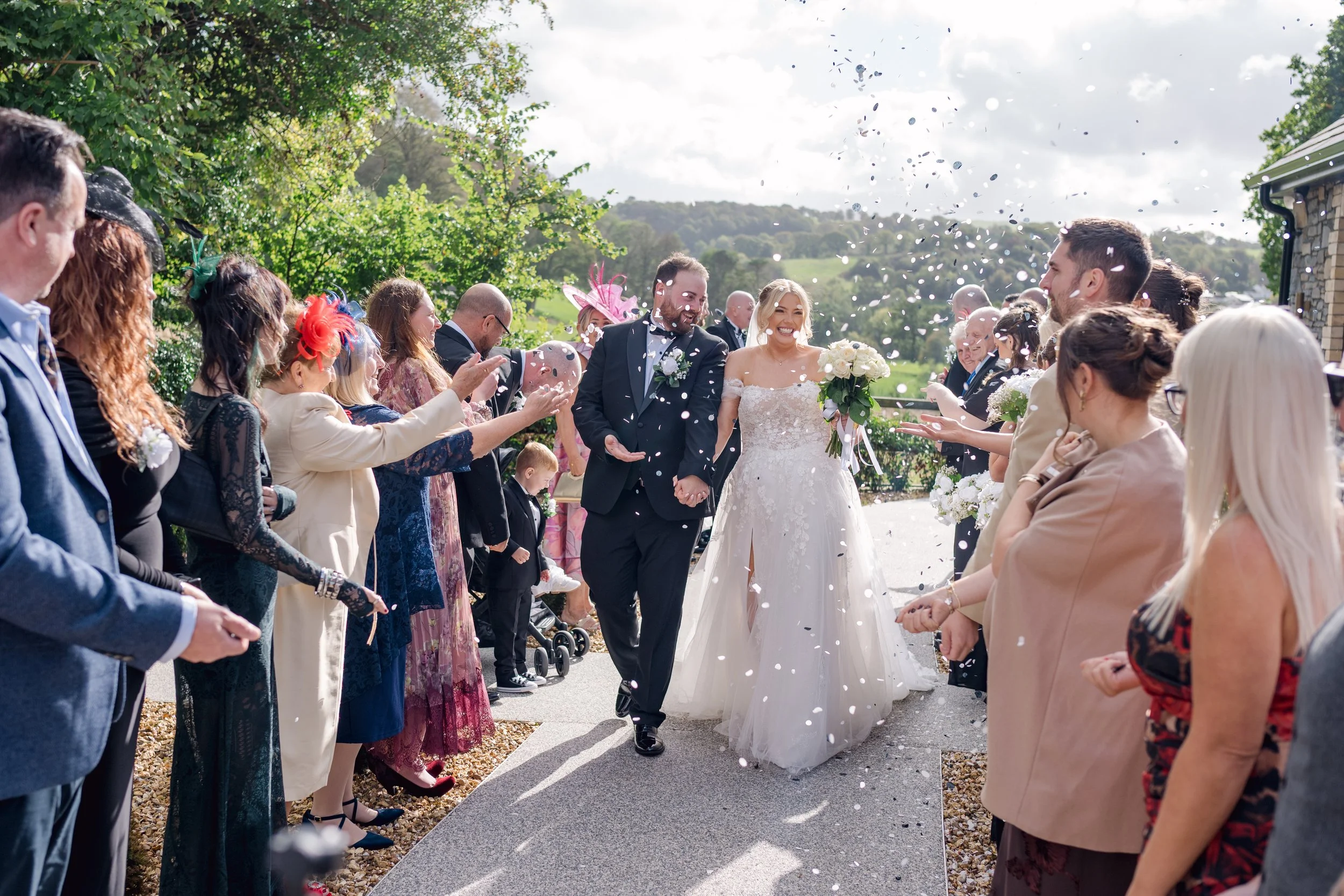
A photograph can suggest a story through a readable interaction, gesture or meaningful detail. For example, a guest reaching towards the couple while others turn to watch can imply a shared exchange, even without a caption. Composition helps direct attention towards the key relationship, while visible surroundings can hint at the setting. A frame needn’t explain the whole event; it should give viewers a clear point of interest and enough clues to engage with it.
Should a wedding gallery always follow the exact timeline of the day?
No. A timeline provides an understandable structure, but the gallery doesn’t need to show every interval in real time. When deciding how to tell a story with a wedding gallery, you might omit routine gaps and move between meaningful scenes, provided the change in time or setting remains clear. A photograph that signals the next part of the celebration can orient viewers without documenting every step between events.
Can wedding details help tell the couple’s story?
Yes, when a detail reveals something about the people or the way they chose to celebrate. A seating plan arranged to bring different generations together, for instance, may help explain a social connection that appears later in the gallery. Place the frame near the people or moment it relates to, so its significance is easier to recognise. If a detail has no personal or contextual role, visual appeal alone may not justify including it.
How can a photographer check whether a wedding gallery flows well?
View the complete sequence at a natural pace, without pausing to assess each photograph individually. Note where the setting, time or emotional tone seems to change without warning. Then invite someone unfamiliar with the wedding to describe what they understand, rather than simply asking whether they like the photographs. Their account can help identify unclear passages; use the couple’s priorities to decide which adjustments matter.