
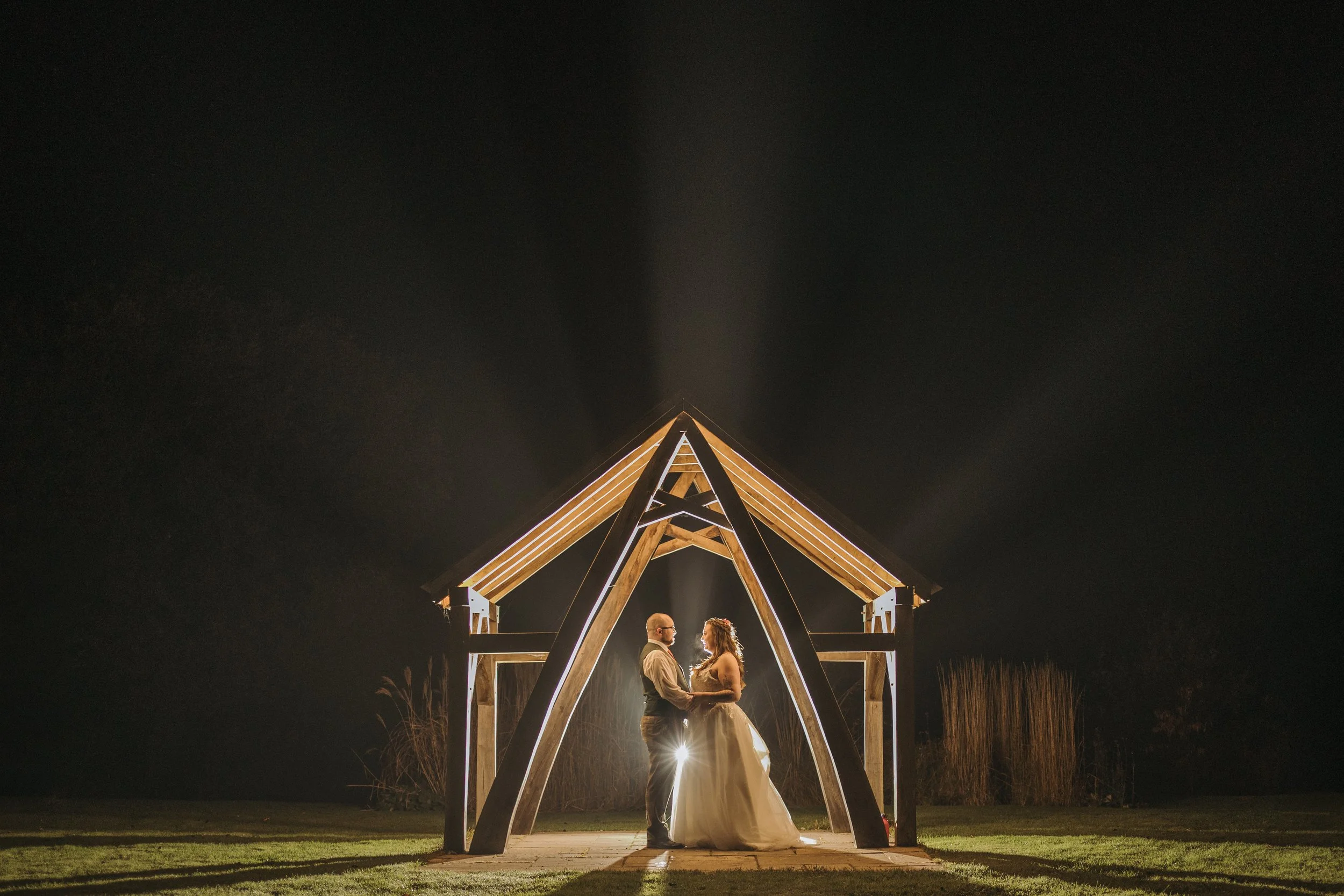
A grand venue won’t organise the group photograph for you. The most useful stately home wedding photography tips balance the setting’s scale with a clear plan for portraits and people: choose an indoor alternative for unsettled weather, make use of varied locations around the grounds and keep the group-photo list focused. Couples are often happiest with 8–12 group photos, so deciding on the essential combinations can help the formal photographs feel considered rather than all-consuming.
It’s understandable to want portraits that do justice to the house and gardens while still leaving time to enjoy the day with your guests. A photographer who can read changing light, guide people naturally and vary compositions can make good use of everything from a grand staircase to a quiet garden corner. A flexible plan matters too: rain may change the location, but it need not rule out portraits.
This guide explains how to plan couple portraits around weather and light, assess a photographer’s experience, vary images without leaving the venue and organise large group photographs. The aim is a practical approach that respects the occasion and leaves room for natural moments as well as formal images.
Key Takeaways
Plan a sheltered portrait option and use changes in light to guide where and when you take couple photographs.
Look for a photographer who can tell the story of a private-home wedding through both composed portraits and candid moments.
Use the house, its grounds and distinct pockets of natural light to create varied images without travelling elsewhere.
Prepare an uncluttered indoor space so portraits can continue comfortably if the weather turns.
Keep formal group photographs focused, with a clear location and a practical plan for gathering guests.
Table of Contents
1. Planning couple portraits around rain and changing light
The strongest backdrops often sit within the house itself: Georgian windows, staircases, light-filled hallways and garden paths offer different compositions. At Harlaxton Manor, soft window light can create bright, flattering portraits, while its staircase can be photographed from above or below. For a clear view of how photographers use varied settings, photographer portfolios can help you assess their approach. Among the most useful stately home wedding photography tips is to consider the backdrop and available light together.
Build flexibility into the portrait plan instead of relying on ideal weather. At Jess and Dan’s Howsham Hall wedding, rain arrived during the planned group photographs, but the sun appeared later for their couple portraits. It’s a useful reminder to identify an indoor option and an outdoor route in advance. If the rain passes, the couple can use the gardens; if it continues, a window, hallway or staircase can provide a considered alternative. Choose a route that avoids busy guest areas.
Natural light changes throughout the day, so match the location to the conditions. A Georgian window can backlight a portrait when the light falls behind the couple, while a shaded hallway may provide softer, more even illumination. At Harlaxton Manor, bright windows and grand interiors offer distinct settings without a long walk between them. Before choosing a composition, notice how the light falls on faces, clothing and the background. Effective stately home wedding photography tips consider the direction of light, not just how a room looks.
Keep portrait time proportionate to the day. Couples can usually keep couple portraits to 10–20 minutes in total, with even 5–10 minutes protected for golden-hour photographs. Golden hour is roughly the last 30–60 minutes before sunset. A short stroll during that period can create space for a quiet moment without making the couple feel absent from the celebration. Agree a return point so they can rejoin guests easily.
For relaxed, documentary-style portraits, encourage movement instead of holding couples in stiff poses. Invite them to walk hand in hand, talk or pause where the light is flattering. At Harlaxton Manor, light-filled hallways suit these natural interactions. A staircase offers another simple prompt: walk a few steps, turn towards each other, then pause while the photographer changes viewpoint.
Coloured uplighters can cast unwanted hues onto skin. Switch them off during portraits, or save them for the dancefloor after the meal and speeches. This helps preserve natural skin tones in the couple’s photographs while letting coloured lighting contribute to the evening atmosphere.
2. Choosing a photographer experienced with private-home weddings
Stately home wedding photography is distinctive because the setting shapes both the images and the day’s movement. Historic rooms, gardens and personal spaces each have their own light, scale and meaning. The photographer needs to tell the couple’s story while making considered use of the house, rather than treating it as a generic backdrop.
For a private-home wedding, look for portfolio work that captures the occasion as it unfolds. Candid moments during the drinks reception can show how a photographer photographs guests naturally alongside formal portraits. A documentary approach also leaves room for spontaneous interactions instead of directing every scene towards a predetermined shot list.
Give meaningful places attention too. Share the stories behind a favourite room, garden path or family gathering place so these details can inform the photographs. At a home wedding, a familiar doorway may mean more than an elaborate feature elsewhere. Thoughtful coverage connects personal details with the wider celebration.
Experience also means understanding how wedding styling works with historic interiors. At Harlaxton Manor, styling can complement the rooms rather than compete with their character. The same principle applies elsewhere: consider existing colours, architectural details and natural focal points before adding flowers or decorations. A restrained palette can sit comfortably alongside historic finishes, while dense styling may distract from them.
Before preparations begin, choose a space with enough room and little clutter. A clear area keeps photographs focused on people, clothing and interactions, rather than bags or household items. In a private home, that might mean using one bedroom for preparations and moving unnecessary objects out of the frame. The photographer can then work consistently as family members come and go.
Choosing locations for an at-home wedding also means deciding how each space will help tell the day’s story. A garden ceremony followed by an indoor reception creates distinct settings while keeping the celebration connected to home. Wadhurst Castle’s planned garden ceremony and garden-party reception show how an event can be shaped around its surroundings. The photographer can capture transitions as well as the main events.
Venue styling should support the flow of the day. At Botleys Mansion, a couple planned to include Turkish wedding traditions, illustrating why cultural details and personal priorities belong in the visual plan. A photographer who understands the event’s structure can anticipate important moments and work unobtrusively. The photographs can show both the atmosphere of the venue and the people who make the occasion personal.
Use a portfolio to assess how the photographer balances interiors, people and unscripted moments. Look for a coherent story across the day, not just individual images of grand rooms. That balance is central to thoughtful stately home wedding photography: the house provides the setting, while the couple and guests give the images meaning.
3. Creating varied images without leaving the venue grounds
Howsham Hall shows how a stately home wedding venue can offer varied photographic settings. Its Great Hall’s large windows bring natural light indoors, while the grounds provide portrait views back towards the house. Ardington House has gardens, lawns and a private island, with the Island Temple overlooking the river. The right setting depends on the images the couple values and the locations available for their celebration.
At Howsham Hall, vary the frame by moving between the Great Hall, the exterior and the grounds. Photograph the building as a setting, then take closer portraits where its details remain visible without overshadowing the couple. In the garden, change your angle or distance to create a different composition. Small adjustments can produce a varied gallery without taking guests away from the venue.
Layout matters as much as scenery. Choose a convenient location for group photographs and a nearby spot for relaxed couple portraits. Keeping the areas close together helps the day flow, limits unnecessary movement and makes it clear where guests should gather. At a private estate, a wedding planner can help coordinate a celebration with more complex logistics than a standard venue.
Plan the route with the venue team before the wedding day. Ask which rooms and garden areas are available, how guests will move between the ceremony and reception, and where photography can happen without disrupting that flow. At Ardington House, for example, the plan can include the river-facing Island Temple and the route through the grounds. Share the intended sequence with venue staff to keep transitions orderly.
Photography rules vary by venue, so ask the venue team which areas are open to photography and whether restrictions apply indoors or outdoors. Ask directly whether permission or additional fees apply instead of assuming every stately home has the same policy. Discuss flash, tripods and drones too, including where equipment can be used and which areas are off limits.
Treat historic interiors with care. Keep equipment clear of furniture, walls and architectural features, and avoid moving objects or placing stands where they could mark surfaces. Follow staff instructions and use established routes, especially around delicate interiors. For outdoor photographs, respect planted areas and keep equipment clear of guest routes and venue operations.
Build the photography timeline around the journey between spaces, not just the time needed for portraits. Use the venue team’s schedule and the flow of guests to plan when the couple moves from the Great Hall to the grounds. A considered route through Howsham Hall can create varied images while preserving time for the celebration.
4. Preparing for unpredictable British weather
Plan indoor portraits alongside the outdoor schedule, so a change in British weather doesn’t leave you without a suitable setting. Choose a sheltered room with natural light, enough space to work and a clear route from preparations to the ceremony. At Harlaxton Manor, large windows bring daylight into many rooms, making photography possible when outdoor conditions are poor. A beautiful interior can become part of the visual story, rather than merely a fallback.
For formal portraits inside a historic house, choose a neutral area and move unnecessary furniture to make room. Check the background from the photographer’s viewpoint, including mirrors, doorways and visible household items. At Harlaxton Manor, large windows provide daylight, while a neutral wall can simplify the composition. Keep the arrangement practical so the room remains usable for guests and the venue team.
Preparation spaces deserve the same care. Choose a room with enough space for the wedding party, then keep bags, coats and packaging outside the main frame. A clear dressing area helps photographs focus on people and interactions. At Bassmead Manor Barns, photographers recommend keeping the upstairs dressing area as clear as possible. Set aside a surface for accessories instead of spreading them across beds and chairs.
Gather wedding details and accessories upstairs in the morning, ready for photographs before the day gathers pace. These might include stationery, jewellery and other items the couple wants recorded. At Harlaxton Manor, invitations can be arranged on antique tables for photographs. Keeping everything together makes it easier to photograph, then return safely to its owners before preparations continue.
Consider where each partner will get ready and how those rooms affect the schedule. At Jess and Dan’s Howsham Hall wedding, the groom prepared with his groomsmen in the downstairs billiard room. A separate room can provide space for preparations without relying on the bridal area. Agreeing on locations early helps the photographer plan transitions between rooms and the ceremony.
Some couples get ready away from the stately home before travelling to the ceremony. In one wedding, the bride prepared at Banyers House in Roysten before travelling to the venue. For this arrangement, plan the photography sequence around the journey and gather key accessories before departure. A packed set of details prevents last-minute searches and helps the morning stay organised.
At a private estate, weather planning connects with the wider logistics of the day, including timings, transport, guest flow and catering. Keep equipment and preparation areas clear of routes used by staff and guests. If the outdoor ceremony or portraits move indoors, tell the venue team about the revised room plan. This makes the transition practical while protecting the schedule and historic rooms.
5. Large group photos at a private-home wedding
A large group photograph can record the scale of a private-home celebration, but it needs deliberate organisation. Couples are often happiest with 8–12 group photos, so prioritise combinations that matter to them. A concise list might include immediate family, each side of the family, the wedding party and everyone together. This protects time for guests to enjoy the reception while preserving the relationships the couple most wants remembered.
Timing helps the gathering feel purposeful. Start group photographs about 15 minutes after the ceremony, giving the couple time to greet guests and take a breather first. Before the ceremony, agree the sequence with the couple and identify someone who can help gather relatives. That person can recognise family members and call the next group, while the photographer concentrates on positioning, expressions and framing.
Choose a location that can safely hold everyone and provides a clear background. At a private home, this might be a broad lawn, courtyard or terrace, with the house behind the guests to establish the setting. Check the frame for parked cars, distracting furniture and uneven ground. A timeless group photograph depends on an orderly composition and visible faces, not simply fitting the largest possible crowd in front of the building.
For very large gatherings, the photographer may need a higher viewpoint. An elevated window, drone or digger scoop can help capture all the wedding guests in one frame. Each option changes the perspective and requires a suitable position on the property. Plan the arrangement around the viewpoint, keeping rows close enough for faces to remain visible and avoiding obstacles that hide people.
At a private estate, group photographs can involve more than 250 guests, so guest flow deserves attention. Keep the gathering point close to the reception area and away from narrow entrances or active service routes. Tell guests where to assemble and give the helper a clear sequence. If weather changes the location, move the group to the agreed sheltered alternative and adjust the arrangement to suit its space.
Styling affects the photograph too. Choose a backdrop that complements the home’s character without competing with clothing or flowers. Check how strong sunlight, shade and the building’s lines affect the group before gathering everyone. A quick test frame can reveal blocked faces, bright patches and awkward spacing while there’s still time to adjust.
For a practical way to strengthen your direction of group photographs, explore wedding photography learning alongside your venue planning.
Institute of Wedding Photographers
Professional development can help photographers strengthen their skills and business practices. If planning portraits, working with historic interiors or directing large groups has highlighted a skill you want to strengthen, structured learning can help you build a more assured practice.
The Wedding Photography Portfolio Builder Workshop and Wedding Photography Mentorship Program offer ways to develop your portfolio and receive guidance. IOWP Awards and Membership provide another route to professional recognition and community. Choose the learning option that best suits your experience and ambitions.
For support developing your wedding photography practice, contact Institute of Wedding Photographers.
Develop your next stage as a wedding photographer
Every stately home wedding is an opportunity to refine how you respond to architecture, light and the relationships within the frame. Turn those experiences into deliberate practice: review your decisions, identify the images you want to strengthen and build a portfolio that reflects your approach. These stately home wedding photography tips can guide that development, whether you’re refining your direction or building a more distinctive body of work.
Institute of Wedding Photographers supports photographers through learning and professional development. The 4 Day Photography Workshop at Ceconi Castle offers an immersive setting for developing your craft; the Wedding Photography Portfolio Builder Workshop focuses on building a portfolio, while the Wedding Photography Mentorship Program offers a further route for learning with guidance. Consider which format best fits your current goals and the skills you want to advance.
Take a considered next step in your professional development. Explore learning with Institute of Wedding Photographers, and continue shaping a confident, distinctive practice.
Frequently Asked Questions
What should couples look for when choosing a stately home wedding photographer in the UK?
Look for a portfolio that tells complete wedding stories, not just standout portraits or architectural images. A full gallery can show how the photographer handles transitions, changing rooms and different parts of the celebration. Notice whether people remain central in grand compositions and whether the images feel consistent across indoor and outdoor settings. Discuss the couple’s priorities and how the photographer will adapt their approach to the venue.
What lighting and weather challenges affect stately home wedding photography?
Stately homes may have bright windows, darker rooms and mixed artificial lighting, resulting in contrasting exposures and colour temperatures. Rain can also limit outdoor options or leave paths and lawns reflective. A photographer can adapt by considering the couple’s position in relation to windows, balancing available light with interior lighting and adjusting exposure as conditions change. Wet stone, glass and polished floors may create reflections, so careful positioning helps control the frame.
Which UK stately homes are best for wedding photography and what are their photography policies?
Harlaxton Manor has bright windows, hallways, a staircase, grand rooms and gardens. Howsham Hall offers a naturally lit Great Hall and grounds with views back towards the house. Ardington House has gardens, lawns and a private island, including the river-facing Island Temple. Check photography rules with each venue’s team.