
Best Camera Settings for Wedding Photography: The 2026 Professional Guide
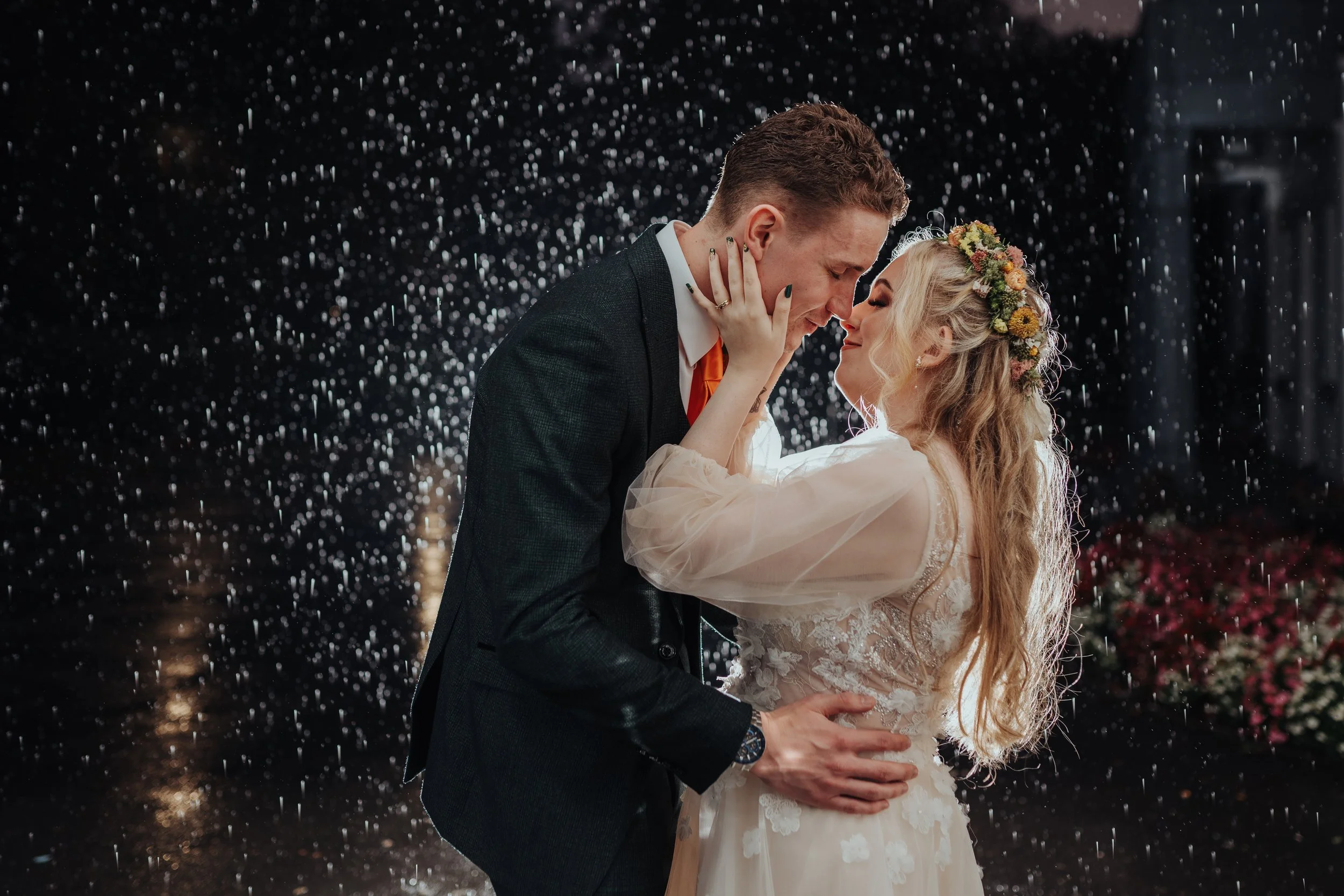
What if the secret to a flawless wedding gallery isn't found in a specific shutter speed, but in how you manage your mental load during the day's most frantic moments? It's natural to feel a sense of trepidation when stepping into a dark church or a high-contrast garden, knowing that a single incorrect focus choice could mean missing a once-in-a-lifetime exchange. Many practitioners find themselves caught between the rigidity of manual control and the unpredictability of automation when searching for the best camera settings for wedding photography.
We understand that true mastery of the craft requires a balance of academic rigour and creative intuition. Through this professional guide, you'll gain the technical precision and creative decision-making required to capture consistent, high-calibre imagery under any environmental pressure. We shall establish a reliable base configuration for your equipment and examine the fluid adjustments necessary to transform your technical output into a prestigious, professional-grade portfolio. By the end of this exploration, you'll possess the confidence to navigate shifting light with the steady hand of a seasoned professional, ensuring your work meets the high standards expected of the modern industry.
Key Takeaways
Learn to establish a technical baseline for your exposure triangle, ensuring that shutter speeds remain sufficiently high to eliminate motion blur during the ceremony's critical moments.
Understand the strategic transition from single to continuous autofocus, so it's easier to trust modern eye-detection technology when capturing fleeting expressions.
Discover the best camera settings for wedding photography across varied lighting conditions, ensuring consistent results from soft morning preparations to low-light evening receptions.
Explore the nuances of scenario-specific configurations, such as employing silent shutters and managing high ISO levels within the quiet, dim environments of traditional venues.
Gain the insight needed to move beyond basic technical safety toward the creative decision-making that characterises an award-winning professional portfolio.
Table of Contents
The Foundation: Why 'Safe' Settings Aren't Enough for Professional Weddings
Mastering the Exposure Triangle in High-Pressure Environments
Elevating Your Craft: From Technical Accuracy to Award-Winning Artistry
The Foundation: Why 'Safe' Settings Aren't Enough for Professional Weddings
Success in this field requires a significant shift in perspective. Professionalism is defined by a sophisticated balance between technical accuracy and artistic vision. While a beginner might aim merely to "get the shot," a seasoned professional focuses on crafting a portfolio-worthy image. This distinction is vital. Throughout the history of wedding photography, the transition from simple documentation to high-calibre artistry has always relied on the photographer’s ability to override the camera’s internal logic. Relying on "Auto" or even semi-automated modes can jeopardise your reputation during high-stakes moments. The camera's light meter often misinterprets the brilliance of a white bridal gown or the deep shadows of a tuxedo, leading to exposures that lack the necessary detail for a high-end finish.
Establishing the best camera settings for wedding photography involves more than just selecting a mode. It's about ensuring consistency across a full day of shooting. When you standardise your settings manually, you create a cohesive look that simplifies your post-production workflow. Instead of correcting a hundred different exposure levels, you can apply a single aesthetic treatment across an entire sequence. This efficiency is what allows a creative business to maintain a recognisable brand identity and deliver a polished final product that reflects the prestigious nature of the event.
The Mental Load of Technical Choices
Transitioning from a hobbyist mindset to a professional workflow involves reducing your mental load. Automating the wrong features, such as letting the camera choose its own focus point, often leads to missed moments or soft images. You must develop the muscle memory required to adjust your dials without breaking eye contact with your subject. This level of discipline ensures that you remain present and ready to capture genuine emotion rather than fumbling with equipment. Mastery of these physical actions is a core component of the Wedding Photography Mentorship Program, where students learn to make technical adjustments instinctively.
RAW vs. JPEG: The Non-Negotiable Standard
Professional wedding photography requires the maximum dynamic range possible. Shooting in RAW is a non-negotiable standard because it provides a safety net when working in unpredictable lighting. Whether you're dealing with harsh midday sun or a dimly lit reception hall, RAW files retain the data needed to recover highlights and lift shadows. While this necessitates greater storage capacity and faster write speeds, the ability to preserve every nuance of the wedding day is worth the investment. It ensures that your final delivery meets the high standards expected by modern couples and remains a viable part of your professional archive for years to come.
Mastering the Exposure Triangle in High-Pressure Environments
Achieving the best camera settings for wedding photography requires a departure from static checklists. Instead, you must adopt a dynamic decision-making process that responds to the environment. For the majority of a wedding day, an aperture of f/2.8 serves as the professional "sweet spot." It provides sufficient light gathering for dim interiors while offering enough depth of field to keep both the bride and groom sharp during the ceremony. While wider apertures like f/1.2 or f/1.4 are tempting for their bokeh, they carry a higher risk of missed focus during movement. Using f/2.8 ensures a higher "hit rate" without sacrificing that sought-after subject separation.
Your shutter speed requires a strict safety floor. When subjects are in motion, such as during the walk down the aisle or the confetti exit, a minimum of 1/200s is essential to prevent motion blur. In high-pressure moments, it's better to embrace digital grain than to risk a soft image. Modern mirrorless sensors, such as those found in the Sony A7 IV or the Canon EOS R6 Mark II, handle ISO 3200 and above with remarkable grace. Understanding Essential Lighting Techniques will help you recognise when to push your ISO to maintain your shutter speed floor, ensuring every frame remains crisp and usable.
Manual Mode vs. Aperture Priority
While full Manual mode offers total control for formal portraits, Aperture Priority is often a secret weapon for the "run-and-gun" nature of a wedding. By using Aperture Priority with "Auto ISO" and a defined "Minimum Shutter Speed" in your camera's menu, you can move from a bright garden to a shaded doorway without fumbling with dials. This allows the camera to handle the exposure shifts while you focus on composition and emotion. This nuanced approach to technical control is a central theme in our wedding photography courses, where we bridge the gap between technical theory and real-world application.
Metering for the White Dress
The stark contrast between a white bridal gown and a black tuxedo is a classic exposure challenge. Evaluative metering often miscalculates the scene, leading to "blown" highlights where the delicate lace detail of the dress is lost forever. To prevent this, monitor your histogram religiously. It's often safer to underexpose the image by a fraction of a stop using the exposure compensation dial. Digital sensors are far more capable of recovering detail from shadows than from overexposed highlights. By protecting your highlights, you ensure the final gallery retains the high-end, professional quality that clients expect from a specialist.
Focus and Drive Modes: Ensuring You Never Miss the 'I Do'
Precision is the hallmark of a professional. When considering the best camera settings for wedding photography, your choice of focus mode often dictates the success of your entire gallery. While traditionalists once favoured AF-S (Single) for its perceived accuracy, the modern wedding environment demands AF-C (Continuous). Mirrorless systems in 2026 are designed to track movement in real-time, ensuring that as a couple walks towards you, the focal plane shifts with them. This constant adjustment is particularly critical during the "first kiss," where the subjects may lean in or out of the narrow depth of field established by a wide aperture.
The advent of Eye-Detection AF has revolutionised how we approach these high-stakes moments. Trusting this technology allows you to focus on composition and narrative rather than manually moving a single focus point. However, this trust must be tempered with discipline. Many professionals refine these instincts during our Wedding Photography Portfolio Builder Workshop, where the emphasis is on achieving consistent results under pressure. For drive modes, avoid the temptation of the highest burst speeds. Setting your camera to a "Low Continuous" mode, typically around 3 to 5 frames per second, provides enough variety to capture the perfect expression without creating the "file bloat" that complicates culling and post-production.
The Case for Back-Button Focus
One of the most effective ways to gain control over your autofocus is through back-button focus. This involves decoupling the focus activation from the shutter button, assigning it instead to a button on the rear of the camera body. It prevents the camera from "hunting" for focus every time you press the shutter to take a photo. On Canon, Nikon, and Sony systems alike, this configuration allows you to lock focus on a stationary subject and then recompose without the risk of the camera refocusing on the background. It's a technique that provides the speed of automation with the deliberate control of a manual workflow.
Focus Area Selection
Choosing the right focus area is just as vital as the mode itself. While "Wide" or "All-Area" tracking is useful in open spaces, "Single Point" or "Small Zone" focus provides the necessary precision for crowded environments. If you are documenting the confetti run, a larger tracking zone helps the camera stay locked on the couple amidst the falling paper. Conversely, for intimate portraits, a single point ensures the focus lands exactly on the eye. While the "Focus and Recompose" method remains a staple for some, the sophisticated tracking in 2026 makes it largely redundant. Following Professional Wedding Photography Tips from industry leaders suggests that leaning into your camera's tracking capabilities will yield a much higher success rate during the day's most fluid moments.
Scenario-Specific Settings: A Roadmap for the Wedding Day
The best camera settings for wedding photography are never universal; they are reactive. A professional must navigate the day as a series of distinct lighting challenges, each requiring a specific technical response. During the bridal preparations, the focus shifts to soft, emotive storytelling. Here, wide apertures such as f/1.8 or f/2.0 are ideal. They allow you to utilise natural light from windows while creating a shallow depth of field that isolates delicate details like the lace of a gown or the application of jewellery. This approach prioritises the atmosphere of anticipation over clinical sharpness.
Transitioning to the ceremony often presents the most significant challenge, particularly within the dim, historic interiors common in the UK. In these ancient stone structures, light is a rare commodity. You must embrace high ISO settings, often reaching 3200 or 6400, to maintain a hand-holdable shutter speed. It's also essential to engage your camera’s silent shutter mode. Maintaining the sanctity of the vows is paramount, and the mechanical click of a shutter can be intrusive in a quiet chapel. By standardising these habits, you ensure your presence remains as discreet as your technical execution is precise.
The drinks reception demands a documentary mindset. As guests mingle and move, your shutter speed should increase to at least 1/250s to freeze candid laughter and interaction. When the evening arrives, the first dance provides an opportunity for creative flair. Many professionals use a technique called "dragging the shutter." By setting a slow shutter speed, perhaps 1/15s or 1/30s, and combining it with off-camera flash, you can capture the vibrant motion of the dance floor while keeping the couple sharp. To truly master these environmental shifts, consider joining our wedding photography training course in the UK.
Taming Harsh Midday Sun
Formal group portraits often occur when the sun is at its zenith, creating harsh shadows and high contrast. To ensure every guest is in focus, you must use a narrower aperture, typically between f/8 and f/11. This provides the deep depth of field necessary for multiple rows of people. If the shadows are too deep, employing high-speed sync (HSS) with a fill flash can balance the ambient light. This allows you to maintain a fast shutter speed while gently illuminating faces, preventing the "squinting" effect often caused by direct sunlight.
Low-Light Reception Magic
Receptions are about capturing the "atmosphere" of the celebration. Auto White Balance often struggles with the mixed lighting of warm tungsten bulbs and modern LEDs, frequently resulting in unnatural skin tones. Manually setting your White Balance to a specific Kelvin value ensures consistency across your gallery. For the dance floor, you must choose your intent. Use 1/15s to create artistic motion trails that convey energy, or switch to 1/250s with a flash to freeze a dramatic lift or spin. This level of intentionality separates the professional from the enthusiast.
Elevating Your Craft: From Technical Accuracy to Award-Winning Artistry
Technical proficiency is merely the foundation upon which true artistry is built. Once you have internalised the best camera settings for wedding photography, your focus naturally shifts from the mechanical to the emotional. This transition marks the beginning of a professional journey that moves beyond simple documentation. While achieving a "correct" exposure is necessary for technical validation, it is your "creative" exposure that defines your unique brand identity. You might choose to underexpose intentionally for a cinematic feel or overexpose for an airy, timeless aesthetic. This level of intentionality is what we explore within our Wedding Photography Mentorship Program, where students are encouraged to find their distinctive voice.
In a crowded market, technical excellence serves as a prerequisite for professional recognition. Precision builds trust. Attaining high standards allows your work to be considered for prestigious accolades such as the IOWP Awards. These honours provide more than just a trophy; they offer professional validation and a competitive advantage that resonates with high-end clients. Peer critique and formal assessment from the Institute of Wedding Photographers ensure that your growth isn't stagnant. They provide the steady hand needed to navigate the complexities of a creative career, turning raw talent into a formalised discipline.
Building a Professional Portfolio
A signature look is rarely an accident. It's the result of applying specific settings consistently to create a visual narrative that attracts your ideal clientele. To achieve this, you must curate a collection of work that demonstrates mastery across diverse lighting scenarios, from harsh midday sun to the deepest shadows of a reception. Attending a Wedding Photography Portfolio Builder Workshop provides the structured environment necessary to refine these skills. It allows you to experiment with creative compositions and lighting techniques without the immense pressure of a live wedding day. This controlled practice ensures that when you step onto the floor, your technical choices are instinctive and your output is flawless.
The Path to Mastery
The Institute of Wedding Photographers believes that the human element is just as vital as the technical one. The ultimate goal is a profound transformation. You move from being a stressed operator, preoccupied with dials and menus, to a composed and creative professional. Master the machine so you can focus on the soul of the wedding. Artistry takes time. You become a quiet observer of genuine emotion, ready to capture the fleeting glances and subtle gestures that define a couple's story. This level of mastery isn't achieved overnight. It takes reflection and expert guidance to reach the point where the camera feels like a natural extension of your vision. Master your equipment now, so that on the wedding day, you can focus on the people who matter most.
Securing Your Future as a Professional Wedding Photographer
Mastering the best camera settings for wedding photography is the first step in a career defined by excellence and discipline. By establishing a technical floor for your shutter speed and embracing the sophisticated tracking of modern mirrorless systems, you ensure that no critical moment is lost to technical error. Whether you're navigating the dim interiors of a historic chapel or capturing the vibrant energy of the first dance, your ability to adjust intuitively allows you to remain a composed and creative presence. This transition from operator to artist is what distinguishes a successful professional in the digital age.
If you're ready to move beyond the theory and formalise your talent, you can refine your technical mastery at an Institute of Wedding Photographers Workshop. Our curriculum offers intensive mentorship from industry leaders and unique portfolio-building opportunities in world-class venues. Graduates also receive official recognition through IOWP Membership, providing the professional validation needed to thrive in a competitive market. The path to mastery is a deliberate one, but with the right guidance, it's entirely attainable. Trust in your technical foundation, focus on the human story, and continue to push the boundaries of your creative vision.
Frequently Asked Questions
What is the best shutter speed for a wedding ceremony?
A shutter speed of 1/200s is the professional standard for capturing the processional and other movements during a ceremony. While 1/100s may suffice for stationary moments, maintaining a higher speed prevents the risk of subtle motion blur caused by the couple's nerves or gestures. In particularly dark venues, you might occasionally drop to 1/60s if using a stabilised lens, though this requires a steady hand and a perfectly still subject.
Should I use Auto ISO for wedding photography?
Using Auto ISO with a defined upper limit is an excellent strategy for managing the best camera settings for wedding photography in fluctuating light. By setting a maximum ISO of 6400 and a minimum shutter speed, you allow the camera to handle exposure shifts while you focus on the narrative. This approach is particularly effective during the drinks reception, where you frequently move between bright outdoor environments and shaded indoor spaces.
Which focus mode is best for the first kiss?
AF-C (Continuous) combined with Eye-Detection AF is the most reliable choice for capturing the first kiss. This configuration ensures the camera constantly tracks the couple as they move towards each other, maintaining sharp focus on the eyes even at wide apertures. It eliminates the delay associated with locking focus in AF-S mode, which can lead to missed moments if the couple shifts their position after the focus is acquired.
Do I really need to shoot in Manual mode all day?
You don't need to stay in full Manual mode for the entire duration of the wedding day to achieve professional results. While Manual is essential for formal portraits and consistent lighting, Aperture Priority serves as a sophisticated tool for transitional moments. Using Aperture Priority with exposure compensation allows you to maintain creative control over depth of field while the camera assists with exposure in rapidly changing conditions.
How do I avoid grainy photos in dark churches?
Avoiding excessive grain in dark churches requires the use of fast prime lenses with apertures of f/1.4 or f/1.8. However, it is vital to remember that a sharp, grainy image is always preferable to a clean, blurry one. Modern noise reduction software is highly effective, so you shouldn't fear pushing your ISO to 3200 or 6400 to maintain a hand-holdable shutter speed within historic or poorly lit venues.
What are the best white balance settings for a reception?
Setting a manual Kelvin value, typically between 3000K and 3500K for indoor receptions, is the best way to ensure consistent skin tones. Auto White Balance often struggles with mixed lighting from DJs, fairy lights, and candles, resulting in erratic colours across your gallery. By choosing a fixed value, you create a stable baseline that makes the post-production and colour-grading process significantly more efficient and cohesive.
Is silent shutter mode okay to use during the ceremony?
Silent shutter mode is highly recommended during quiet ceremonies to maintain a discreet and respectful presence. It allows you to capture intimate moments without the intrusive sound of a mechanical shutter. You must be cautious of artificial lighting, however, as some LED systems can cause horizontal "banding" when using an electronic shutter. Always take a test shot to check for these lines before the ceremony begins.
How do I ensure the bride's dress isn't 'blown out' in bright sun?
To protect the delicate details of a white dress in harsh sunlight, you should underexpose the image by 0.3 or 0.7 stops. Using the highlight alert or "zebras" on your camera's display provides a visual warning of overexposure. By prioritising the highlights, you ensure that the texture of the lace is preserved in the RAW file, allowing you to lift the shadows safely during the editing process.