
Photography Courses: A Complete Guide to Finding Your Path in 2026
In an ever-expanding digital landscape, selecting the right educational path can feel like a daunting task. The sheer volume of available photography courses often leaves aspiring artists feeling uncertain-unsure which programme will best serve their skill level, and concerned about making a worthwhile investment in their future. For many, the most significant question remains: how does one transform a deeply held passion for the craft into a viable, respected career? This uncertainty is precisely what we aim to resolve.
This comprehensive guide for 2025 has been created to provide clarity and direction. We will meticulously explore the different types of photography education, from short workshops to accredited diploma programmes. Whether you wish to elevate your hobby to a higher standard or are determined to build a professional portfolio, our expert insights will help you identify the most suitable path. Allow us to help you navigate your options and find the course that will truly transform your creative potential into professional distinction.
Understanding the Landscape: Types of Photography Courses Available
The world of photography education is vast and varied, offering a structured path for every level of ambition. Whether you are beginning your creative journey or seeking to achieve professional distinction, understanding the available formats is the first step toward mastery. Each structure caters to different learning styles, budgets, and career goals. This section will demystify the main categories of photography courses, enabling you to compare their merits and find the programme that best suits your aspirations.
Online Courses vs. In-Person Workshops
The digital age presents a primary choice between remote and physical learning. Online programmes, such as those found on platforms like Coursera, offer unparalleled flexibility and self-paced study, ideal for mastering the theoretical principles that underpin the craft. In contrast, in-person workshops provide the invaluable benefit of hands-on practice, immediate tutor feedback, and networking with peers. While online study excels for theoretical knowledge, practical skills in lighting and composition are often refined more swiftly with direct, expert guidance. A hybrid model, combining online theory with practical assignments, often provides a balanced and effective learning experience.
University Degrees vs. Specialised Diplomas
For those seeking formal qualifications, the decision often lies between a university degree and a specialised diploma. A BA or MA in Photography provides a deep academic grounding, exploring the critical and conceptual dimensions of the medium over several years. This route delves into the history and art of photography in great detail. A specialised diploma, however, offers a more direct, career-focused path, delivering intensive, practical training over a shorter period. When evaluating these options, consider the time commitment, financial investment (£), and the specific career outcomes you wish to achieve, as the industry values a strong portfolio as much as formal accreditation.
Short-Term Intensives vs. Long-Term Mentorship
Beyond foundational photography courses, development is often about targeted refinement. Short-term intensive workshops are designed to elevate a single skill, such as advanced portrait lighting, post-production techniques, or posing subjects. These are ideal for established photographers looking to quickly upgrade a specific area of expertise. Long-term mentorship, conversely, offers a more holistic form of guidance. A mentor helps you navigate career challenges, build a sustainable business, and cultivate a unique artistic style, providing the strategic oversight needed to transform your passion into a recognised professional practice.
Defining Your Goals: How to Choose a Course That's Right for You
The search for the ‘best’ photography course is a highly personal one, as the most suitable path is determined not by a universal standard, but by your own distinct ambitions. Before committing to a programme of study, it is crucial to define what you wish to achieve. Are you seeking to elevate a personal passion into a more refined hobby, or are you preparing to launch a full-time professional career? This framework will help you align your personal goals with the right educational journey, ensuring your investment of time and resources yields the most rewarding results.
For the Hobbyist: Mastering the Fundamentals
For those who wish to capture moments with greater technical skill and creative confidence, the focus should be on foundational principles. Our introductory photography courses are designed to demystify the core concepts of the exposure triangle, composition, and focus. The primary goal is to empower you to take consistently better photographs of family, travel, and personal interests, transforming your creative vision into technically proficient images. These programmes build a solid base from which your passion can flourish.
For the Aspiring Professional: Building a Career
Transitioning from enthusiast to professional requires a structured path that extends far beyond the basics. This journey involves dedicated portfolio development, the acquisition of essential business skills, and a deep understanding of client interaction. An accredited programme provides a significant advantage, offering mentorship and a curriculum designed to cultivate a signature style. For some, this may mean pursuing an in-depth photography degree, while for others, a vocational qualification from the Institute offers the professional edge needed to run a profitable and sustainable business.
For the Established Photographer: Specialisation and Refinement
Continuous professional development is the hallmark of a successful photographer. Even seasoned professionals must refine their craft to remain competitive and creatively inspired. Advanced workshops and masterclasses offer the opportunity to specialise in a lucrative niche, such as wedding, commercial, or fine art portraiture. These programmes focus on mastering new techniques, integrating emerging technologies, and developing sophisticated business strategies to elevate your brand, increase your rates, and reignite your creative drive.
The Hallmarks of a High-Quality Photography Programme
In a saturated market, not all photography courses are created equal. To truly advance your craft, it is essential to look beyond persuasive marketing and assess the fundamental value a programme offers. The distinction between adequate training and an exceptional educational experience lies in a few key indicators. Investing in a course that embodies these qualities is a direct investment in your future success as a photographer.
Expert Tutors with Real-World Industry Experience
The calibre of your instructor is paramount. A superior programme is led not by academics alone, but by working professionals with recognised awards and a compelling, contemporary portfolio. Learning from tutors who actively practise their craft provides invaluable, relevant insights into the industry. Furthermore, smaller class sizes ensure you receive the personalised, one-to-one feedback required to truly refine your technical skills and creative vision.
Emphasis on Practical, Hands-On Learning
Photography is a practical discipline; theory provides the foundation, but skill is built through application. An effective course must prioritise hands-on learning, moving you from the classroom to the studio and out on location. Look for programmes that include live shoots with professional models, opportunities to master different lighting configurations, and access to a range of industry-standard equipment. It is in this guided, supportive environment that knowledge transforms into mastery.
A Clear Path to a Professional Portfolio
Your portfolio is your single most important asset. A high-quality course is structured with this outcome at its core, dedicating significant time to portfolio development. This includes expert guidance on curating your best images, sequencing them for maximum impact, and presenting a cohesive body of work. This focus on a professional-standard portfolio aligns with the principles of major industry bodies like the Professional Photographers of America, who recognise it as the cornerstone of a photographer's career. Critical feedback during portfolio reviews is an invaluable part of this process.
Community, Networking, and Accreditation
Your educational journey should not be a solitary one. Learning alongside a dedicated group of peers creates a lasting support network for collaboration and encouragement. The best photography courses also facilitate networking opportunities with established industry professionals, opening doors to future prospects. Finally, accreditation from a recognised professional body lends significant credibility to your qualification, assuring clients and employers of your high standard of training. Discover our accredited, tutor-led programmes.
Exploring Key Photography Specialisations
Once you have achieved a firm grasp of the fundamentals, the natural progression for an aspiring professional is to refine your focus and specialise. This path allows you to cultivate true mastery within a chosen field, which not only deepens your creative satisfaction but also positions you to command higher fees and attract a discerning clientele. Each niche requires a unique combination of technical and creative skills, so it is vital to consider which area of photography most ignites your passion. Our advanced photography courses are structured to help you develop this specialist expertise and gain a distinct professional edge.
Wedding & Event Photography
This dynamic field is a sophisticated blend of portraiture, documentary storytelling, and even product photography. Success demands excellent interpersonal skills and the ability to work with composure under significant pressure. As one of the most commercially viable paths, it offers substantial career opportunities. Our specialist training focuses on the art of posing individuals and groups, mastering on-location lighting, and developing the instinct to capture fleeting, emotional moments with distinction.
Portrait & Fashion Photography
Dedicated to capturing the essence of a person or the identity of a brand, this specialisation requires a deep, technical understanding of lighting, posing, and creative art direction. The work is incredibly varied, ranging from timeless family portraits to high-fashion editorial shoots for recognised publications. Within our programmes, a strong emphasis is placed on professional studio practice, advanced retouching, and the nuances of directing and interacting with models to achieve a specific vision.
Landscape & Travel Photography
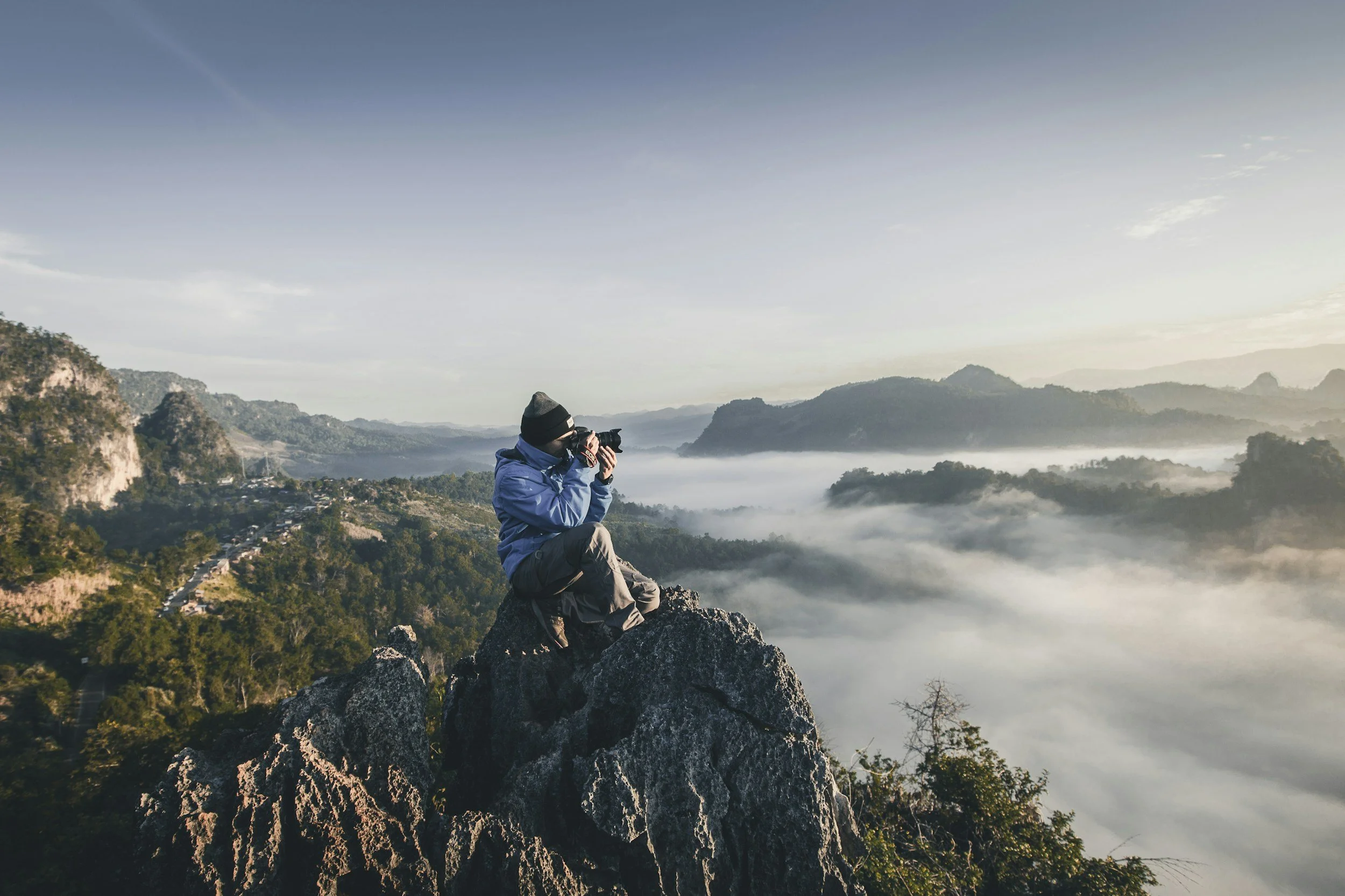
For those drawn to the natural and built environments, this discipline demands a mastery of natural light, an impeccable eye for composition, and a great deal of patience. It often involves travel to remote and beautiful locations in pursuit of the perfect shot. Advancing in this area requires technical precision in skills such as long exposure, filter use, and focus stacking. The business side is equally important, and our curriculum covers the practicalities of selling fine art prints and licensing your images to agencies and publications.
The Institute of Photographers: A Path to Professional Mastery
For those who seek to transform their passion into a distinguished career, The Institute of Photographers offers a definitive path. Our approach is built upon a foundation of intensive, practical learning and expert mentorship, designed to provide you with a distinct professional edge. We move beyond theoretical knowledge to deliver career-focused training that equips aspiring photographers with the skills, portfolio, and credibility required to excel in a competitive industry.
Immersive, Tutor-Led Workshops in Inspiring Locations
We believe true mastery is achieved through experience. Our curriculum extends beyond the traditional classroom, offering immersive, tutor-led workshops in some of the world's most inspiring locations. You will have the opportunity to refine your craft in the romantic streets of Paris or within the historic walls of an Italian castle. Closer to home, our dedicated portfolio-builder days in London and Bristol are structured to provide you with the high-quality imagery essential for a professional showcase. With intentionally small group sizes, you are assured of dedicated, one-on-one guidance from your tutor.
A Focus on Career-Defining Wedding Photography
The Institute specialises in training the next generation of elite wedding photographers-a field that is as rewarding as it is challenging. Our specialised photography courses cover every facet of the profession, from mastering client posing and lighting techniques to developing a robust business and marketing strategy. You will learn directly from award-winning photographers who are established leaders in the industry, gaining insights that are simply unavailable elsewhere. The objective is clear: to graduate not only with technical proficiency but with a portfolio that speaks to your unique style and attracts your ideal clients.
The Value of Mentorship and the IOWP Community
Your development as a photographer does not end upon graduation. We provide a comprehensive mentorship programme that offers long-term career guidance, ensuring you have expert support as you navigate your professional journey. Furthermore, all our students gain access to the prestigious International Organization of Wedding Photographers (IOWP), an invaluable community that offers networking opportunities and enhances your professional standing. This combination of continued support and institutional credibility is central to our commitment to your success.
Transform your career with an Institute of Photographers course.
Your Next Chapter in Photographic Mastery
The journey to becoming a proficient photographer begins with a single, well-considered decision. Selecting from the vast landscape of photography courses requires a clear understanding of your own aspirations and a discerning eye for the hallmarks of a quality programme. Whether your ambition is to capture compelling portraits or document life’s most significant moments, the right education provides the structure needed to transform creative potential into professional distinction.
At The Institute of Photographers, we are dedicated to guiding this transformation. We invite you to elevate your craft through our tutor-led workshops in exclusive locations like Italian castles, or our specialised training in professional wedding photography-fully accredited by the International Organization of Wedding Photographers (IOWP). This is more than education; it is a pathway to achieving a recognised and rewarding career.
Your vision deserves a distinguished platform. Allow us to provide the guidance and accreditation to help you build it. Explore our professional photography workshops and mentorship programmes.

Frequently Asked Questions About Our Photography Courses
Do I need to own an expensive camera to start a photography course?
While professional-grade equipment is an asset, it is not a prerequisite for beginning your studies. The fundamental principles of photography-understanding light, composition, and exposure-are universal. We recommend starting with any camera that offers manual controls, such as a DSLR or mirrorless model, as this will allow you to apply the core techniques taught. The focus of our foundational modules is on developing your creative vision, not on the cost of your kit.
How much do professional photography courses typically cost in the UK?
The investment in professional training varies significantly across the UK. An intensive weekend workshop may cost between £200 and £500. For comprehensive, accredited programmes that provide a pathway to a career, you can expect the cost to range from £2,500 to over £7,000. This fee typically reflects the level of tutor access, the depth of the curriculum, and the prestige of the final qualification you will receive upon successful completion.
What is the difference between a 'course' and a 'workshop'?
A 'course' refers to a structured programme of study, designed to provide comprehensive knowledge over an extended period. It follows a detailed curriculum, includes multiple modules, and often leads to a formal qualification. In contrast, a 'workshop' is typically a short, intensive session, lasting from a few hours to a couple of days. It is designed to teach a specific, practical skill, such as studio lighting or post-processing techniques, rather than broad, foundational theory.
How long does it take to become a professional photographer after completing a course?
Completing a formal course provides the essential technical skills and creative foundation, but the journey to becoming a professional requires further dedication. Realistically, it takes most photographers between one to three years of consistent practice post-qualification to build a strong portfolio, establish a client base, and create a sustainable business. This period is crucial for refining your unique style and developing the necessary industry connections to secure professional work.
Can I really make a living from photography in 2025?
Yes, a viable and rewarding career in photography is certainly achievable in the modern market. The key to success lies in specialisation and professionalism. Photographers who cultivate a distinct style in a niche such as commercial, architectural, or portrait photography are in high demand. A successful career now depends equally on artistic talent and business acumen-both of which are central pillars of the training provided by the Institute.
Are online photography courses worth the investment compared to in-person training?
Both formats offer distinct advantages. Online learning provides unparalleled flexibility, allowing you to study around existing commitments. In-person training offers immediate, hands-on guidance in a collaborative environment. Our accredited online photography courses are designed to offer the best of both worlds, combining a structured, self-paced curriculum with rigorous, one-to-one feedback from a dedicated tutor on every assignment, ensuring you receive the mentorship required for true mastery.